
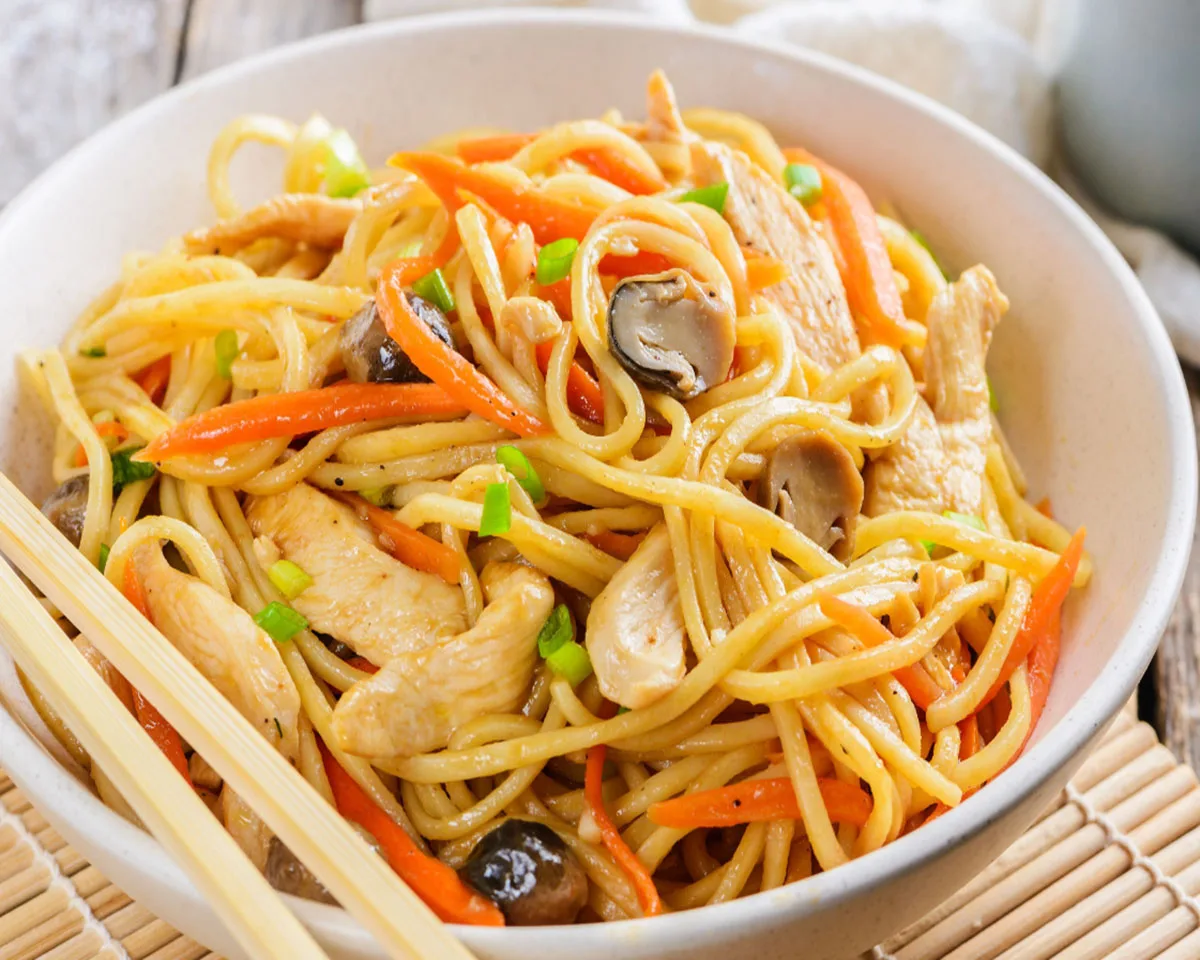
I’ll never forget the first time chicken lo mein completely won me over. It was a rainy Friday night, and my roommate came home with a bag of Chinese takeout. She set a steaming container of lo mein on the counter, and just the smell alone stopped me mid-conversation. The noodles were glossy, the chicken was tender, and every single bite was layered with this deep, savory flavor I couldn’t quite explain. I told myself I’d never be able to recreate that at home. Fast forward a few years, and my homemade chicken lo mein has officially replaced that takeout order for good. It’s faster, fresher, and honestly so much more satisfying when you make it yourself.
Chicken Lo Mein: What It Is and Why Everyone Loves It
Understanding the dish before you cook it makes a real difference in how you approach the recipe. Chicken lo mein is a classic Chinese-American stir-fried noodle dish built on a foundation of soft noodles, seasoned protein, colorful vegetables, and a rich, savory sauce. The name “lo mein” comes from the Cantonese words for “tossed noodles,” which perfectly describes the technique at the heart of the dish. Moreover, chicken lo mein has earned its place as one of the most beloved takeout staples in the United States because it delivers bold flavor with minimal complexity. Once you understand what makes it tick, cooking it at home feels completely natural and surprisingly effortless.
Lo Mein vs. Chow Mein: Understanding the Key Difference
Many home cooks confuse lo mein with chow mein, but the two dishes are distinctly different. Chow mein uses noodles that get fried until crispy, while chicken lo mein relies on fully cooked, soft noodles that you toss gently through the sauce. This tossing technique allows every strand to absorb the sauce deeply, creating that signature glossy, coated finish you see in authentic lo mein. Additionally, lo mein tends to have a softer, more cohesive texture throughout, whereas chow mein offers a crunchier contrast. Knowing this distinction helps you cook with the right technique from the very start.
Picking the Right Noodles for Your Chicken Lo Mein
Traditional chicken lo mein calls for fresh Chinese egg noodles, which have a pleasantly chewy texture and a golden color from the eggs. However, this recipe uses 12 oz of pasta cooked according to package directions, making it completely accessible for everyday home cooks. Spaghetti and linguine are the best substitutes because they mimic the length and texture of lo mein noodles very closely. Cook them just slightly under the suggested time on the package so they stay firm enough to hold their shape during stir-frying. The table below gives you a clear breakdown of your best noodle options.
| Noodle Type | Texture | Availability |
|---|---|---|
| Fresh lo mein noodles | Chewy, traditional | Asian grocery stores |
| Spaghetti | Smooth, firm | Any grocery store |
| Linguine | Flat, slightly tender | Any grocery store |
| Udon noodles | Thick, soft | Most grocery stores |
Building the Flavor Base with Chicken and Vegetables
The ingredients you choose and how you prepare them directly determine the quality of your final dish. This chicken lo mein recipe uses a focused, well-balanced mix of protein and vegetables that cook at complementary speeds, ensuring nothing ends up overdone or underdone. Furthermore, every component serves a specific flavor purpose, so the dish feels cohesive and deeply satisfying rather than like a random mix of ingredients thrown together. Taking the time to slice and prep everything before you heat the pan is the single most important step you can take toward a successful stir-fry.
Cooking the Chicken to Perfection
Start with 1 pound of chicken breasts, sliced thinly against the grain. Thin slices cook fast over high heat, which keeps the chicken juicy instead of dry and tough. Heat 1 tablespoon of canola oil in a large skillet over high heat, then add the chicken with 3 cloves of minced garlic, 2 tablespoons of grated ginger, and 2 tablespoons of low-sodium soy sauce. Cook everything for 4 to 5 minutes until the chicken develops a light brown color on the outside. Then remove the chicken from the pan and set it aside, leaving any remaining liquid and oil behind. That leftover liquid carries concentrated flavor that the vegetables will absorb beautifully in the next step.
Cooking the Vegetables for the Right Texture
With the chicken resting on the side, add the mushrooms and onions directly to the same pan. Cook them for 3 to 4 minutes until the onions soften and the mushrooms begin to caramelize at the edges. Next, stir in 1 1/2 cups of finely shredded Napa cabbage and a cup of matchstick carrots. Continue cooking for another 3 minutes. The Napa cabbage wilts quickly and adds a mild, slightly sweet depth to the dish, while the carrots retain just enough crunch to create a pleasant textural contrast. Together, these vegetables build a colorful, nutrient-rich base that makes chicken lo mein as visually appealing as it is delicious.
| Vegetable | Cook Time | Flavor Contribution |
|---|---|---|
| Baby bella or shiitake mushrooms | 3–4 minutes | Earthy, savory depth |
| Small onion | 3–4 minutes | Sweet, savory base |
| Napa cabbage | 3 minutes | Mild, tender body |
| Matchstick carrots | 3 minutes | Color and light crunch |
Mastering the Sauce That Defines Chicken Lo Mein
The sauce is where chicken lo mein transforms from a simple stir-fry into a truly crave-worthy meal. It’s the ingredient that connects every component — the noodles, the chicken, and the vegetables — into one unified, intensely flavorful dish. Thankfully, this sauce uses pantry staples that most home cooks already keep on hand, and it comes together in about one minute flat. Additionally, the balance between salty, savory, and subtly sweet flavors makes this sauce taste like something you’d order at a restaurant, not something you pulled together on a Tuesday night.
Whisking Together a Restaurant-Quality Sauce
In a small mixing bowl, whisk together 1/4 cup of low-sodium chicken broth, 1 teaspoon of cornstarch, 1 tablespoon of sesame oil, 1/4 cup of low-sodium soy sauce, and 1 teaspoon of light brown sugar. The cornstarch is the key ingredient here — it thickens the sauce as it heats up, giving it that glossy, clingy consistency that coats every noodle strand evenly. Sesame oil brings a deep, nutty aroma that’s instantly recognizable in Chinese-style cooking. The brown sugar adds just enough sweetness to balance the saltiness of the soy sauce without making the dish taste sweet. This combination is simple, effective, and completely reliable every time you make it.
Finishing the Dish in the Pan
Pour the sauce over the vegetable mixture and bring it to a rolling boil for exactly 1 minute. This step activates the cornstarch and creates the thick, restaurant-quality consistency you want. Next, return the cooked chicken to the pan and stir everything together thoroughly until each piece is fully coated in sauce. Then add the cooked pasta and toss vigorously so the noodles soak up the sauce from every angle. The entire mixture should look glossy, fragrant, and beautifully coated at this point. Finally, garnish with freshly sliced green onions right before serving for a bright, fresh finish that cuts through the richness of the sauce.
Serving, Storing, and Customizing Your Chicken Lo Mein
This chicken lo mein recipe is as practical as it is delicious. It serves well straight from the pan, stores easily in the refrigerator, and adapts to almost any dietary preference or pantry situation without losing its essential character. Whether you’re feeding a hungry family on a weeknight or meal-prepping for the days ahead, this recipe consistently delivers satisfying, flavorful results with very little effort beyond the initial cook.
Easy Ways to Make This Recipe Your Own
Swapping the protein is one of the easiest customizations you can make. Shrimp, thinly sliced beef, pork tenderloin, or firm tofu all work wonderfully in place of chicken. For the vegetables, feel free to add snap peas, broccoli florets, baby corn, or thinly sliced bell peppers. If you enjoy heat, stir a teaspoon of chili garlic sauce or sriracha into the sauce before you pour it into the pan. For a vegetarian version, replace the chicken broth with vegetable broth and skip the chicken entirely — the sauce and noodles carry more than enough flavor to keep the dish satisfying. Every variation works because the core sauce recipe is so well-balanced and reliable.
How to Store and Reheat Leftovers
Transfer any leftover chicken lo mein into an airtight container and refrigerate it for up to 3 days. When you’re ready to eat it again, the best reheating method is the stovetop. Add a small splash of water or chicken broth to a hot skillet, then toss the noodles over medium heat for 2 to 3 minutes until everything heats through evenly. This approach revives the glossy sauce and keeps the noodles from drying out or clumping together. The microwave also works in a pinch — just cover the container loosely and heat in 60-second intervals, stirring in between to distribute the heat evenly.
Frequently Asked Questions
Can I use a different protein instead of chicken in lo mein? Absolutely. Shrimp, beef, pork, or tofu all work well in this recipe. Adjust the cooking time based on your chosen protein so it cooks through properly without overcooking.
What pasta works best as a lo mein noodle substitute? Spaghetti and linguine are your closest matches in both texture and length. Cook them just slightly under the recommended package time so they stay firm enough to hold up during stir-frying.
Why does my lo mein come out soggy? Soggy lo mein usually happens when the pan is too crowded or the heat is too low. Always use a large skillet and keep the heat on high so the ingredients stir-fry rather than steam.
Is homemade chicken lo mein healthier than takeout? Yes, generally. This recipe uses low-sodium soy sauce and chicken broth to keep the salt in check. You also control every ingredient that goes into the dish, which makes it easy to adjust for your dietary needs.
Can I prep chicken lo mein ahead of time? Yes. You can cook all the components separately and store them in the refrigerator. Combine and toss everything with the sauce just before serving to preserve the best texture and flavor.
Conclusion
This homemade chicken lo mein brings everything you love about your favorite Chinese takeout directly to your kitchen table, with fresher ingredients and flavors you can fully control. From the perfectly seasoned, golden chicken to the colorful, tender vegetables and the glossy, umami-rich sauce that ties it all together, every element of this dish earns its place. It’s quick enough for a busy weeknight and impressive enough for a casual dinner with friends. Make it once, and it will absolutely become one of your most-requested weeknight recipes going forward.
  Ingredients
Chicken:
– 1 tablespoon canola oil
– 1 pound chicken breasts, thinly sliced
– 3 cloves garlic, minced
– 2 tablespoons ginger, grated
– 2 tablespoons low sodium soy sauce
Veggies:
– 1 (8 oz) package mushrooms, thinly sliced (baby bellas or shiitake)
–Â small onion, finely chopped
–Â 1/2 cups Napa cabbage, finely shredded
–Â cup matchstick carrots
Sauce:
– 1/4 cup low sodium chicken broth
– 1 teaspoon cornstarch
– 1 tablespoon sesame oil
– 1/4 cup low sodium soy sauce
– 1 teaspoon light brown sugar
Other:
– 12 oz pasta, cooked according to package directions
 Instructions:
1. In a large skillet, heat oil over high heat. Add chicken, garlic, ginger, and soy sauce. Cook for 4-5 minutes until the chicken is browned. Remove the chicken from the pan, leaving any liquid or oil in the pan.
2. Add mushrooms and onions to the pan, cooking for 3-4 minutes until the onions are soft and the mushrooms start to brown. Mix in the cabbage and carrots, cooking for an additional 3 minutes.
3. Meanwhile, whisk together the ingredients for the sauce. Pour the sauce over the vegetable mixture and bring to a boil for 1 minute.
4. Add the chicken back to the pan, mixing until everything is well coated and the sauce starts to thicken.
5. Toss the cooked pasta with the chicken and vegetable mixture.
6. Garnish with sliced green onions before serving. Enjoy your delicious homemade Chicken Lo Mein!