
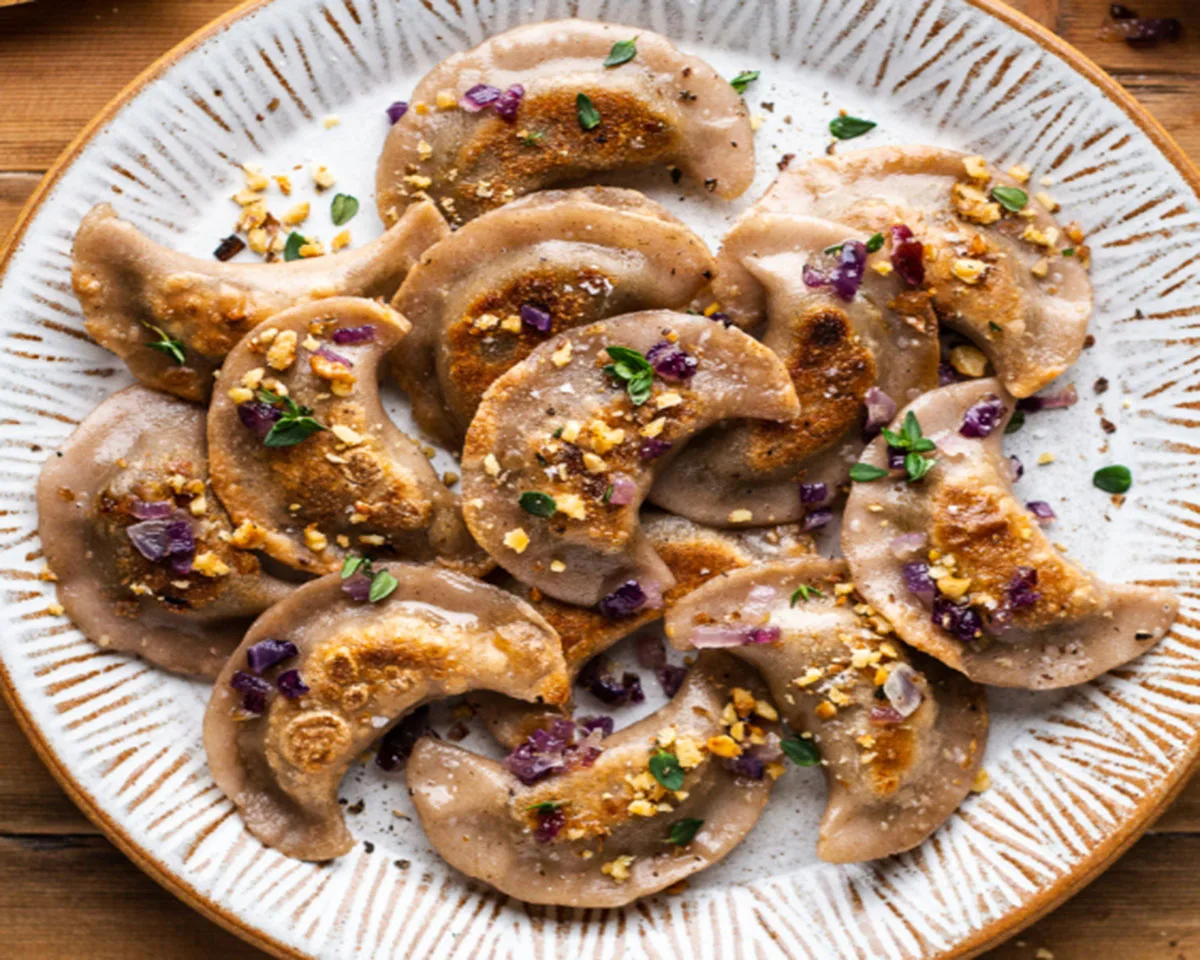
Vegan Gluten-Free Pierogi with Mushrooms: A Comfort Food Classic for More Tables

The first time I made vegan gluten-free pierogi with mushrooms, I expected a compromise. I thought the dough might crack, the filling might feel worthy but not exciting, and the whole project might end with a pile of torn dumplings on my counter. Instead, I got something warm, savory, and deeply satisfying. The mushrooms turned rich and earthy, the rosemary and garlic made the kitchen smell incredible, and the finished pierogi tasted like true comfort food. That is why vegan gluten-free pierogi with mushrooms deserve more attention. They honor the spirit of traditional pierogi while opening the door to cooks who avoid gluten, dairy, or eggs. Current top recipe results share the same core ideas: a mushroom-forward filling, a flexible gluten-free dough, and a boil-then-fry option that gives the dumplings even better texture.

Why Vegan Gluten-Free Pierogi with Mushrooms Work So Well

Pierogi already welcome many fillings and traditions

Pierogi are one of Poland’s best-known comfort foods, and they are traditionally made from unleavened dough wrapped around sweet or savory fillings. Culture.pl notes that popular savory versions include sauerkraut and mushrooms, while miniature mushroom-filled uszka are strongly tied to Polish Christmas traditions. That history matters because it shows that mushroom-based pierogi are not a modern gimmick. They already belong to the broader pierogi story. Vegan gluten-free pierogi with mushrooms simply adapt that tradition for more eaters by changing the dough and leaving out animal-based ingredients without losing the dish’s cozy identity.

Mushrooms bring the deep flavor these dumplings need

Mushrooms are a smart filling for vegan pierogi because they bring savory depth without meat or cheese. Culture.pl describes mushrooms as an important part of Polish cooking, including as stuffing for dumplings, especially around Christmas. In your recipe, the mushrooms cook with shallots, garlic, rosemary, miso, balsamic vinegar, and a touch of maple syrup. That combination builds layers of flavor instead of relying on one-note seasoning. As a result, the filling tastes earthy, slightly sweet, and deeply umami-rich, which helps vegan gluten-free pierogi with mushrooms feel hearty enough for dinner rather than like a side dish or substitute.

The Ingredients That Make the Dough and Filling Successful

Psyllium, rice flour, and starch help replace gluten

The hardest part of gluten-free pierogi is not the filling. It is the dough. Top recipes solve that problem in a few different ways, but they consistently rely on structure-building ingredients such as psyllium, starch, and carefully chosen flours. Lazy Cat Kitchen uses buckwheat flour, rice flour, tapioca starch, and psyllium. George Eats takes a slightly different route with rice flour, tapioca flour, psyllium husk powder, and boiling water to create elasticity. Both approaches point to the same truth: good gluten-free pierogi dough needs flexibility, moisture, and enough binding power to hold its shape during rolling, filling, and boiling. That is exactly why your dough uses psyllium plus a mix of buckwheat, rice flour, and tapioca starch.

The mushroom filling needs moisture control and strong seasoning

A great filling for vegan gluten-free pierogi with mushrooms should taste concentrated, not watery. That is why your instructions cook the mushrooms until the excess liquid evaporates before adding miso and balsamic vinegar. Lazy Cat Kitchen follows that same strategy, and it makes a big difference because wet filling can weaken delicate gluten-free dough. The shallots add sweetness, the garlic and rosemary add fragrance, and the miso gives the filling a deeper savory backbone. Then the balsamic vinegar sharpens everything just enough to keep the mushrooms from tasting flat. Together, those ingredients create a filling that feels carefully built rather than merely acceptable.

Component Why it matters in vegan gluten-free pierogi with mushrooms
Mushrooms Bring earthy, savory depth
Miso paste Adds umami and richness
Balsamic vinegar Brightens the filling
Psyllium Helps bind and flex the dough
Rice flour Keeps the dough lighter
Buckwheat flour Adds flavor and structure
Tapioca starch Improves stretch and tenderness

How to Make Vegan Gluten-Free Pierogi with Mushrooms More Manageable

Work with the dough while it is pliable and lightly hydrated

Gluten-free dough behaves differently from wheat dough, so handling matters. George Eats explains that boiling water can scald gluten-free flour and gelatinize the starches, which improves elasticity and makes the dough easier to shape. Your recipe uses warm water rather than a full scald, but the same principle still applies: hydration and timing matter. After the psyllium thickens, the dough should come together with enough softness to roll thinly without crumbling. If it dries out, shaping becomes harder. If it gets too wet, sealing becomes messy. The best approach is to work in small batches, keep the dough covered, and moisten the edges before sealing so each dumpling stays closed in the pot.

Boil first, then pan-fry for better texture

Many pierogi recipes, including traditional ones, rely on a two-step finish. First, the dumplings boil until cooked through. Then, if you want extra color and texture, they go into a skillet. Culture.pl describes pierogi as boiled pastry parcels that are often served with simple toppings, and George Eats also notes that gluten-free pierogi can be boiled, fried, or boiled and then fried. That final pan-fry is especially useful here because it gives vegan gluten-free pierogi with mushrooms a crisp edge that contrasts with the tender filling. Your onion topping and crushed walnuts make that finish even better by adding sweetness, richness, and crunch.

Serving Ideas, Helpful Tips, and Easy Variations

Onion oil and walnuts make a simple but effective finish

Pierogi do not need complicated sauces to feel complete. Culture.pl notes that traditional pierogi are often served with fried onions, melted butter, sour cream, or simple herb garnishes. Your vegan version keeps that same spirit by finishing the dumplings with onion-infused oil and crushed walnuts. That works especially well because the onions add sweetness while the walnuts add texture and a nutty contrast to the mushroom filling. If you want a fuller plate, serve the pierogi with a crisp salad, braised cabbage, or a simple bowl of soup. Even then, vegan gluten-free pierogi with mushrooms remain the star because they bring enough flavor to anchor the whole meal.

Freeze extra dumplings for future comfort-food meals

One of the smartest things about making pierogi is that the effort pays off later. George Eats notes that gluten-free pierogi can be frozen uncooked on a tray and then transferred to a container once solid. That same approach works beautifully here. If you make a double batch of vegan gluten-free pierogi with mushrooms, you can freeze them in a single layer, then boil them straight from frozen later. That turns a somewhat hands-on recipe into a practical meal-prep win. It also makes the recipe easier to justify on a busy week because one cooking session can lead to several comforting meals.

Vegan Gluten-Free Pierogi with Mushrooms FAQ

Are mushroom pierogi traditional?

Yes, mushroom-filled pierogi are part of Polish culinary tradition. Culture.pl highlights mushroom and sauerkraut pierogi as a popular filling, especially in autumn, winter, and Christmas Eve meals. Mini mushroom-filled uszka are also traditionally served with borscht on Christmas Eve.

What helps gluten-free pierogi dough stay together?

Recipes that work well usually rely on a combination of gluten-free flours, starch, and a binder such as psyllium. Some also use boiling water to improve elasticity. Those methods help the dough roll, fold, and seal more reliably.

Should I boil or fry vegan gluten-free pierogi with mushrooms?

Boiling is the essential first step because it cooks the dough. However, a quick pan-fry afterward adds color and a slightly crisp texture, which many cooks prefer for serving.

Can I make vegan gluten-free pierogi with mushrooms ahead of time?

Yes. You can prepare and freeze them uncooked, then boil them later. That makes them a useful make-ahead meal for busy days or holiday cooking.

Conclusion

Vegan gluten-free pierogi with mushrooms prove that inclusive cooking does not need to feel like a compromise. They bring together a deeply savory mushroom filling, a thoughtfully built gluten-free dough, and the kind of comforting texture that makes pierogi so beloved in the first place. Better yet, they connect naturally to existing pierogi traditions instead of drifting away from them. With the right dough mix, careful moisture control, and a simple onion-and-walnut finish, this recipe offers a dinner that feels both practical and special. Whether you make them for a holiday table or a quiet weekend project, vegan gluten-free pierogi with mushrooms deliver warmth, flavor, and a sense of real care in every bite. They also invite more people to share the same platter, which may be the best reason of all to keep this recipe in rotation often.

Full recipe:

Ingredients:

**For the Filling:**
– 1 tablespoon olive oil
– 1½ finely diced banana shallots
– 10½ ounces fresh mushrooms, diced
– 4 large garlic cloves, finely diced
– Leaves from 1 large sprig of rosemary, chopped
– Salt and pepper to taste
– 1 heaped teaspoon red miso paste
– 2 teaspoons balsamic vinegar
– ½-1 teaspoon maple syrup (optional)

**For the Gluten-Free Dough:**
– 1 teaspoon psyllium powder or 2 teaspoons psyllium husks
– ½ cup buckwheat flour (60g)
– ½ cup rice flour (70g)
– ¼ cup tapioca starch or cornflour (30g)
– ½ teaspoon sea salt
– 1 tablespoon olive oil
– 2-3 tablespoons warm water

**For the Topping:**
– 2 tablespoons olive oil
– ½ finely diced onion
– Salt to taste
– Crushed walnuts

  Instructions:

**For the Filling:**
1. Heat olive oil in a large pan. Sauté shallots until translucent and lightly caramelized.
2. Dice mushrooms into medium-sized pieces. Add garlic to the pan and cook for a few minutes before adding chopped rosemary, salt, and pepper.
3. Add half of the mushrooms and cook for 5-10 minutes until browned. Then add the rest and cook until all excess water evaporates.
4. Season with miso paste, balsamic vinegar, maple syrup (if using), salt, and pepper. Let the filling cool before using.

**For the Dough:**
1. Mix psyllium powder/husks with ¼ cup of water in a bowl. Set aside for 10 minutes to thicken.
2. In a mixing bowl, combine flours and salt. Add olive oil, thickened psyllium, and enough water to form a dough (about 2-3 tablespoons).
3. Divide the dough in two. Roll it thinly on a floured surface and cut circles using a cookie cutter.
4. Place a teaspoon of filling in each circle, moisten the edges with water, fold in half, and seal the edges.

**Cooking:**
1. Boil a pot of water. Boil 5 pierogi at a time for 5 minutes or until done. Remove with a slotted spoon.
2. For pan-frying, allow pierogi to cool. Heat oil in a skillet, fry pierogi until browned on both sides.
3. Fry diced onion in oil until translucent. Serve warm pierogi coated in the onion-flavored oil, topped with crushed walnuts.

This recipe offers a tantalizing blend of flavors and textures, ensuring a delightful dining experience for both vegan and gluten-free food enthusiasts.

Leave a Comment