
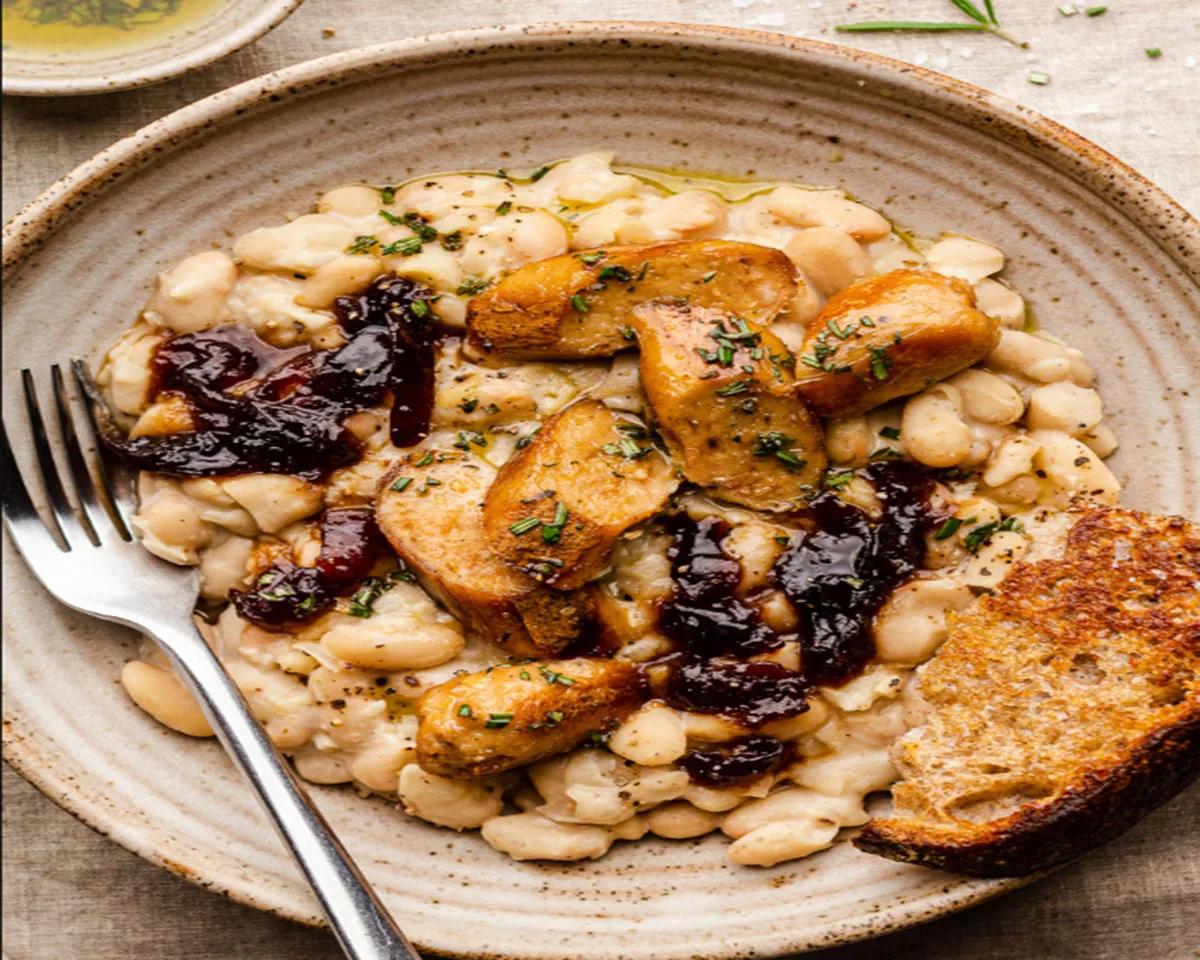
The Best Creamy Cannellini Beans with Rosemary and Balsamic Onions

Cannellini beans with rosemary and balsamic onions always remind me of a rainy October afternoon I spent in a small stone cottage in Tuscany. I remember the heavy scent of wild rosemary growing just outside the kitchen door and the way the sharp, sweet aroma of balsamic vinegar filled the room as the onions slowly caramelized on the stove. My host, a wonderful woman named Elena, insisted that the secret to true Italian comfort was taking the humblest ingredients and treating them with the utmost respect. As I sat at her worn wooden table, dipping a piece of charred sourdough into a bowl of these velvety, herb-scented beans, I realized that fancy techniques couldn’t compete with this level of soul-warming flavor. It is the kind of meal that makes you want to slow down, pour a glass of wine, and savor every bite with people you love. You don’t need a trip to Italy to bring this rustic magic into your own dining room tonight. This recipe has become my absolute favorite for busy weeknights because it feels incredibly sophisticated while using simple pantry staples. If you want a dinner that is creamy, tangy, and deeply satisfying, these cannellini beans are the answer.

Master the Creaminess of Cannellini Beans

Cannellini beans with rosemary and balsamic onions represent a pinnacle of plant-based Italian cooking that emphasizes texture and aromatic depth. You start by sautéing finely diced onions and garlic in a generous amount of olive oil to create a sweet, fragrant base for the legumes. By adding a splash of plant-based milk and crushing a few of the beans with your fork, you create a natural creaminess that mimics a rich dairy sauce without any heavy cream. Most successful versions of this dish rely on a slow simmer to allow the beans to absorb the garlic and onion flavors fully.

Choosing Your Legumes and Aromatics

Selecting high-quality canned beans saves you hours of soaking time while still delivering a buttery, melt-in-your-mouth experience. You should look for organic varieties whenever possible to ensure the beans are tender and the canning liquid is clear. Fresh garlic and onions are non-negotiable here, as they provide the essential savory backbone that makes the “humble” bean feel like a gourmet main course.

The Secret to a Thickened Texture

Simmering the bean mixture over low-medium heat allows the starches to release and the plant-based milk to reduce into a silky glaze. You must stir the pan frequently to prevent the bottom from sticking, which also helps break down the outer skins of the smashed beans for a smoother finish. Adding a touch of nutritional yeast introduces a subtle nutty, cheesy note that rounds out the savory profile perfectly.


Ingredient Preparation Purpose
Cannellini Beans Drained and partially mashed Provides a creamy, hearty base
Soy/Plant Milk 1 cup Creates a rich, dairy-free sauce
Onion Chutney 1/2 cup Adds a deep, jammy sweetness
Balsamic Vinegar 2 tablespoons Delivers a sharp, acidic punch
Nutritional Yeast 2 tablespoons Enhances the savory, cheesy flavor

Elevating the Dish with Balsamic Onions and Sausages

Balsamic onions and pan-fried vegan sausages add a layer of complexity and chew that turns a side dish into a complete, high-protein meal. You create a quick “balsamic jam” by simmering store-bought onion chutney with quality balsamic vinegar and a touch of maple syrup. This mixture caramelizes in the pan, resulting in a dark, glossy topping that cuts through the mild creaminess of the white beans.

Achieving the Perfect Char on Sausages

Slicing your vegan sausages on a diagonal increases the surface area, allowing more of the meat-free protein to come into contact with the hot skillet. You want to pan-fry them until they develop a deep, charred crust on both sides, which introduces a smoky element to the final bowl. Once the sausages are browned, they act as the perfect vessel for carrying the sweet and tangy balsamic glaze.

Balancing Sweet and Tangy Flavors

Combining the sharp acidity of balsamic vinegar with the floral sweetness of maple syrup ensures your onion topping is perfectly balanced. This contrast is a hallmark of Mediterranean cuisine, where “agrodolce” (sour and sweet) flavors are used to brighten up earthy ingredients like beans and grains. The result is a sophisticated flavor profile that keeps your palate engaged from the first bite to the last.

The Magic of Homemade Rosemary Infused Oil

Rosemary oil serves as the final, aromatic “signature” that ties all the elements of this Italian classic together. You can easily make this at home by gently heating extra virgin olive oil until small ripples appear on the surface, then adding finely chopped fresh rosemary leaves. This process draws out the essential oils of the herb, creating a bright green, fragrant liquid that tastes like the Italian countryside.

How to Properly Infuse Your Herbs

Removing the oil from the heat before adding the rosemary prevents the delicate leaves from burning or turning bitter. You want to hear a gentle sizzle when the herbs hit the oil, indicating that the heat is sufficient to release the flavor without scorching the plant matter. This infused oil can be stored in a jar on your counter and used to garnish everything from roasted vegetables to fresh hummus.

Choosing the Best Extra Virgin Olive Oil

Using a high-quality, cold-pressed olive oil for your infusion makes a massive difference in the final taste of the dish. Look for an oil with a peppery finish or grassy notes, as these will complement the pine-like aroma of the fresh rosemary. Since you are using the oil as a finishing touch rather than for high-heat cooking, the nuances of a premium oil will really shine through.

Serving and Storing Your Italian Bean Feast

Cannellini beans with rosemary and balsamic onions are best enjoyed hot, immediately after assembly, to appreciate the contrast between the creamy beans and the crisp sausages. You should serve the dish in wide, shallow bowls and always include a thick slice of crusty bread for mopping up every last drop of the sauce. If you have leftovers, they store beautifully in the refrigerator for up to three days, as the flavors only deepen with time.

The Importance of Crusty Bread

A rustic sourdough or a toasted ciabatta provides a necessary textural contrast to the soft, velvety beans. You can even rub a raw clove of garlic over the toasted bread before serving to add an extra layer of Mediterranean aroma. The bread acts as a functional tool for gathering the beans and the balsamic onion glaze, making the meal an interactive and satisfying experience.

Reheating Tips for Creamy Beans

Reheating bean-based dishes can often cause the sauce to thicken too much, as the legumes continue to absorb moisture. You can fix this by adding a small splash of plant milk or water when warming the beans back up on the stove. This restores the original silky consistency and ensures the dish remains light and appetizing rather than becoming a thick paste.

Frequently Asked Questions

Can I use dried cannellini beans instead of canned?

You certainly can, but you will need to soak them overnight and boil them for about 60 to 90 minutes until they are tender. Canned beans are a fantastic time-saver and work perfectly for achieving the creamy texture required for this specific recipe.

What if I don’t have vegan sausages?

The dish is incredibly flavorful even without the sausages. You can substitute them with roasted mushrooms, smoked tofu, or simply enjoy the creamy beans and balsamic onions as a lighter vegetarian meal.

Is the nutritional yeast necessary?

While optional, nutritional yeast adds a layer of “umami” and a slight cheesy flavor that elevates the plant-based milk sauce. If you don’t have it, you can add a little extra black pepper or a pinch of smoked paprika for depth.

How long does the rosemary oil last?

When stored in a clean, airtight jar on your kitchen counter, the rosemary oil will stay fresh and flavorful for about one to two weeks. It is a versatile pantry staple that you will find yourself drizzling over almost everything.

Conclusion

Creating a bowl of creamy cannellini beans with rosemary and balsamic onions allows you to experience the heart of Italian home cooking in under thirty minutes. This recipe proves that you don’t need expensive ingredients to produce a meal that feels like a gourmet luxury. By focusing on the texture of the beans and the aromatic power of fresh rosemary, you create a dish that is both nourishing and deeply impressive. Whether you are cooking for a crowd or just enjoying a quiet evening at home, this rustic classic is guaranteed to satisfy. Pick up a loaf of fresh bread, start simmering your balsamic onions, and bring a taste of the Mediterranean to your table today.

Full recipe:

Ingredients:

For the Cannellini Beans:
– 2-3 tablespoons (30-45 ml) of olive oil, divided
– 1 small finely diced onion
– 4 cloves of finely diced garlic
– 3 cans (400 g / 14 oz each) of cannellini beans
– 1 cup (240 ml) of soy or other plant-based milk
– 2 tablespoons of nutritional yeast (optional)
– Salt and black pepper, to taste
– ½ cup of store-bought onion chutney
– 2 tablespoons (30 ml) of quality balsamic vinegar
– 2 teaspoons (10 ml) of maple syrup
– 4 vegan sausages (optional)

For the Rosemary Oil:
– 1/3 cup (80 ml) of extra virgin olive oil
– 0.3 oz (8 g) of rosemary leaves (from 4 sprigs)

  Instructions:

**For the Cannellini Beans:**

1. In a large frying pan, heat up two tablespoons of olive oil. Add the finely diced onion and sauté for 5-10 minutes. Later, add the finely diced garlic. Sauté on low-medium heat, stirring frequently, until they are softened and fragrant but not browned.

2. Season the mixture with salt and black pepper, and then add the drained cannellini beans. You can squash a portion of the beans with a fork to achieve a creamier texture. Pour in the soy or other plant-based milk and nutritional yeast (if using). Season again.

3. Simmer the mixture on low-medium heat, stirring frequently, until it becomes creamy and thickened.

4. While the beans are simmering, heat one teaspoon of olive oil in a heavy skillet. Slice the vegan sausages on the diagonal into 1.25 cm (½-inch) pieces and pan-fry them until they are lightly charred on all sides.

5. Once the sausages are done, remove them from the pan. Add the onion chutney, balsamic vinegar, and maple syrup to the pan. Season and simmer for a few minutes until the mixture thickens and caramelizes.

6. Divide the hot, creamy beans between bowls. Top them with the fried sausages, a spoonful of the onion chutney sauce, and a drizzle of rosemary oil. This dish pairs perfectly with a slice of crusty bread.

**For the Rosemary Oil:**

1. Pick the rosemary leaves, remove the hard ends, and finely chop the leaves using a herb cutter, sharp knife, or a mini food chopper.

2. Heat up the extra virgin olive oil in a small pot until the oil has small ripples on the surface. Remove it from the heat and add all the chopped rosemary in. The rosemary should sizzle as it hits the oil but should not turn brown (test with a couple of pieces of rosemary first to be sure).

3. Transfer the rosemary-infused oil to a small jar and keep it on the kitchen counter. You can use it to enhance the flavors of cooked beans, soups, pasta, hummus, and more. Enjoy!

Leave a Comment