
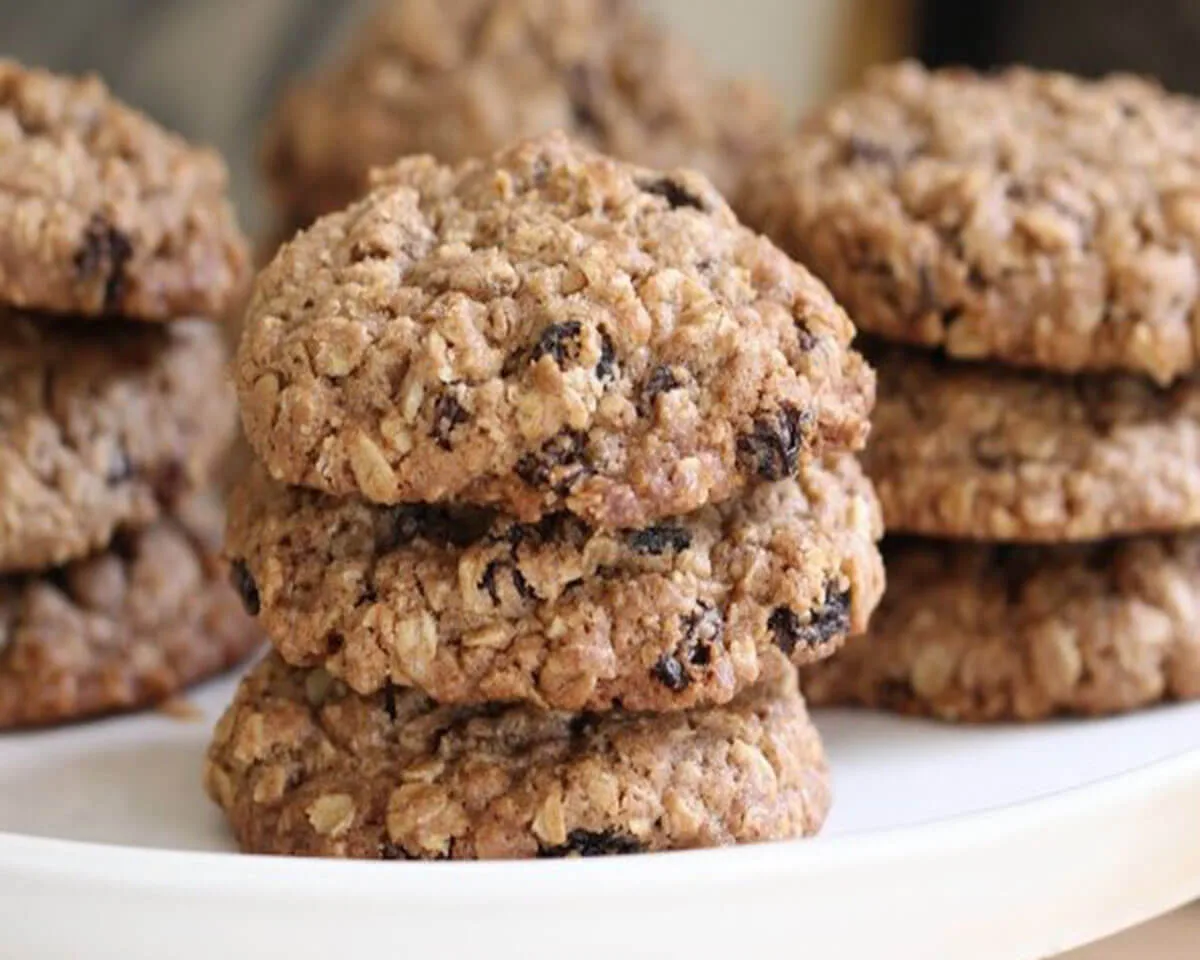
I still remember standing on a stool in my grandmother’s kitchen, reaching up to grab a warm cookie from a cooling rack. Those Chewy Oatmeal Raisin Cookies smelled like cinnamon, butter, and pure comfort. She always made a double batch on rainy afternoons. I would sneak a few before dinner, and she would pretend not to notice. That memory has stuck with me for decades. As an adult, I spent years trying to replicate her recipe. Some attempts turned out dry and crumbly. Others spread into flat, greasy disks. Then I finally cracked the code. The secret lies in the right ratio of brown sugar to white sugar, old-fashioned oats instead of instant, and a crucial resting period after baking. Now I bake these Chewy Oatmeal Raisin Cookies for my own kids, and the smell still transports me right back to that stool in her kitchen. These cookies deliver a hearty, chewy texture, bursts of sweet raisins, and a warm cinnamon hug in every bite. Today I will show you exactly how to achieve that perfect balance. Let me walk you through the simple steps that guarantee a soft, chewy, irresistible cookie every single time.
PART 1: Why Old-Fashioned Oats Make All the Difference
The Texture Battle: Rolled Oats vs. Instant Oats
Many home bakers grab the wrong type of oats for Chewy Oatmeal Raisin Cookies. Instant oats come pre-cooked and dried into small, dusty flakes. They absorb too much moisture and turn mushy. Quick-cooking oats sit somewhere in between, but they still lack structure. Old-fashioned rolled oats work best. These large, flat flakes hold their shape during baking. They create that signature chewy bite with a slight nuttiness. When you bite into a properly made cookie, you should feel distinct oat pieces, not a homogeneous paste. Always use old-fashioned rolled oats. Do not substitute steel-cut oats either; those are too hard and will not cook through in a short baking time.
The Role of Brown Sugar in Creating Chewiness
Sugar does more than add sweetness. It controls texture. White sugar promotes crispiness and spread. Brown sugar, especially light brown sugar, contains molasses. That molasses adds moisture and acidity, which helps create a chewier, softer cookie. This recipe uses 1/2 cup of white sugar and 1 full cup of light brown sugar. The higher brown sugar ratio guarantees that chewy texture you crave. The butter also plays a role. You need softened butter, not melted. Creaming softened butter with sugar incorporates air, which gives the cookies lift without making them cakey. Melted butter produces denser, flatter cookies. So take your butter out of the refrigerator at least an hour before you start baking.
PART 2: Ingredient Breakdown and Preparation Steps
Gathering Your Pantry Staples
For these Chewy Oatmeal Raisin Cookies, assemble the following ingredients. You need 3/4 cup of softened unsalted butter, 1/2 cup of white granulated sugar, 1 cup of light brown sugar (packed), 2 large eggs, 1 teaspoon of vanilla extract, 1.25 cups of all-purpose flour, 1 teaspoon of baking soda, 1/2 teaspoon of kosher salt, 3 cups of old-fashioned rolled oats, and 1.33 cups of raisins. Do not skip the salt. Salt balances the sweetness and enhances the buttery, nutty flavors. For the raisins, you can plump them up by soaking them in warm water for 10 minutes before adding. Drain them well. Plumper raisins stay softer in the finished cookies.
The Creaming Method for Light and Fluffy Dough
Preheat your oven to 350°F (175°C). In a large bowl, beat the softened butter on medium-high speed for about 2 minutes. The butter should look smooth and almost fluffy. Add the white sugar and light brown sugar. Continue beating for another 4 minutes. This extended creaming time creates tiny air pockets that make the cookies tender. Scrape down the sides of the bowl halfway through. Add the eggs one at a time, beating well after each addition. Then add the vanilla extract and beat until smooth. In a separate bowl, whisk together the flour, baking soda, and salt. Gradually add this dry mixture to the wet ingredients, half at a time. Stir just until combined. Do not overmix. Overmixing develops gluten and makes cookies tough.
| Ingredient | Amount | Temperature / Preparation |
|---|---|---|
| Unsalted butter | 3/4 cup | Softened (room temperature) |
| White sugar | 1/2 cup | Granulated |
| Light brown sugar | 1 cup | Packed |
| Eggs | 2 large | Room temperature |
| Vanilla extract | 1 tsp | Pure, not imitation |
| All-purpose flour | 1.25 cups | Spooned and leveled |
| Baking soda | 1 tsp | Fresh, not expired |
| Kosher salt | 1/2 tsp | Or 1/4 tsp table salt |
| Old-fashioned oats | 3 cups | Rolled, not instant |
| Raisins | 1.33 cups | Plumped if desired |
PART 3: Shaping, Baking, and the Resting Secret
Scooping and Arranging for Even Baking
After you fold in the oats and raisins, the dough will look thick and slightly sticky. Use a medium cookie scoop (about 1.5 tablespoons) for standard-sized cookies. For larger, bakery-style cookies, use a larger scoop or roll golf-ball-sized dough balls. Place them on a baking sheet lined with parchment paper or a silicone baking mat. Leave plenty of space. For standard cookies, place 12 per sheet. For large cookies, place only 6 per sheet. Do not flatten the dough balls. They will spread naturally during baking. For extra chewy texture, refrigerate the scooped dough balls for 30 minutes before baking. Chilling solidifies the butter, which slows spreading and deepens the flavor.
The Early Pull Method for Perfect Chewiness
Bake standard-sized Chewy Oatmeal Raisin Cookies for 8 to 9 minutes. Bake large cookies for 14 to 15 minutes. Here is the crucial tip. Remove the cookies from the oven when the edges look set but the centers still appear soft, underdone, and slightly puffy. They should have very little browning on top. Do not wait for them to turn golden brown. If you do, they will become crispy and dry. Let the cookies cool on the baking sheet for 5 to 10 minutes. During this time, residual heat continues to bake the centers without hardening the edges. This resting period creates that signature chewy, tender interior. After cooling on the sheet, transfer them to a wire rack to cool completely. If you try to move them too soon, they will fall apart.
PART 4: Storing, Customizing, and Serving Your Cookies
Keeping Cookies Chewy for Days
Store these Chewy Oatmeal Raisin Cookies in an airtight container at room temperature. Add a slice of plain white bread to the container. The bread releases moisture, keeping the cookies soft and chewy for up to a week. Replace the bread slice every two days. Do not refrigerate the cookies. The refrigerator dries them out and makes the texture hard. For longer storage, freeze the baked cookies in a single layer in a freezer bag for up to 3 months. Thaw at room temperature for 30 minutes. You can also freeze the raw scooped dough balls. Place them on a baking sheet, freeze until solid, then transfer to a freezer bag. Bake frozen dough balls directly from the freezer, adding 2 to 3 minutes to the bake time.
Creative Variations and Serving Ideas
Customize these Chewy Oatmeal Raisin Cookies in many ways. Swap the raisins for dried cranberries or chopped dried apricots. Add 1/2 cup of chopped walnuts or pecans for extra crunch. Replace 1/2 cup of the flour with whole wheat flour for a heartier texture. Add 1 teaspoon of cinnamon to the dry ingredients for more warmth. For a chocolate twist, use 1/2 cup of mini chocolate chips instead of raisins. Serve these cookies with a tall glass of cold milk, a cup of hot coffee, or a scoop of vanilla ice cream between two cookies for an ice cream sandwich. They also make fantastic homemade gifts. Stack them in a decorative tin with parchment paper between layers. Include a small card with the recipe. Your friends will ask for more.
Frequently Asked Questions
Why did my Chewy Oatmeal Raisin Cookies turn out dry and crumbly?
Dry cookies usually come from overbaking or too much flour. Remove the cookies when the centers still look soft. Measure your flour by spooning it into the measuring cup and leveling it off. Do not scoop directly from the bag.
Can I use raisins that are hard and shriveled?
Hard raisins will stay hard in the baked cookies. Plump them first by covering them with boiling water for 10 minutes. Drain well and pat dry before adding to the dough.
How do I make these cookies gluten-free?
Substitute the all-purpose flour with a 1:1 gluten-free baking blend. Use certified gluten-free oats. Add 1/4 teaspoon of xanthan gum if your blend does not include it. The texture will be slightly more delicate.
Why did my cookies spread too much and become flat?
Flat cookies mean your butter was too soft or melted. Chill the dough balls for 30 minutes before baking. Also, ensure your baking soda is fresh. Old leavening agents lose their power.
Can I reduce the sugar in this recipe?
You can reduce the white sugar to 1/4 cup, but the cookies will be less sweet and may spread more. Do not reduce the brown sugar; it provides the chewy texture.
What is the best way to get perfectly round cookies?
As soon as the cookies come out of the oven, use a large round cookie cutter or the edge of a spatula to gently nudge any uneven edges into a circle. Work quickly while the cookies are still hot and soft.
Conclusion
These Chewy Oatmeal Raisin Cookies bring back the simple joy of homemade baking. They require basic ingredients and a few smart techniques. The old-fashioned oats provide hearty chewiness. The brown sugar keeps them soft. The early pull from the oven and the resting period on the baking sheet guarantee that perfect texture every time. I have baked hundreds of batches of these cookies over the years. They never fail to make people smile. My grandmother’s recipe lives on in my kitchen, and now it can live on in yours. So preheat your oven, soften your butter, and measure out those oats. Your family deserves a cookie that tastes like a warm memory. Happy baking.