
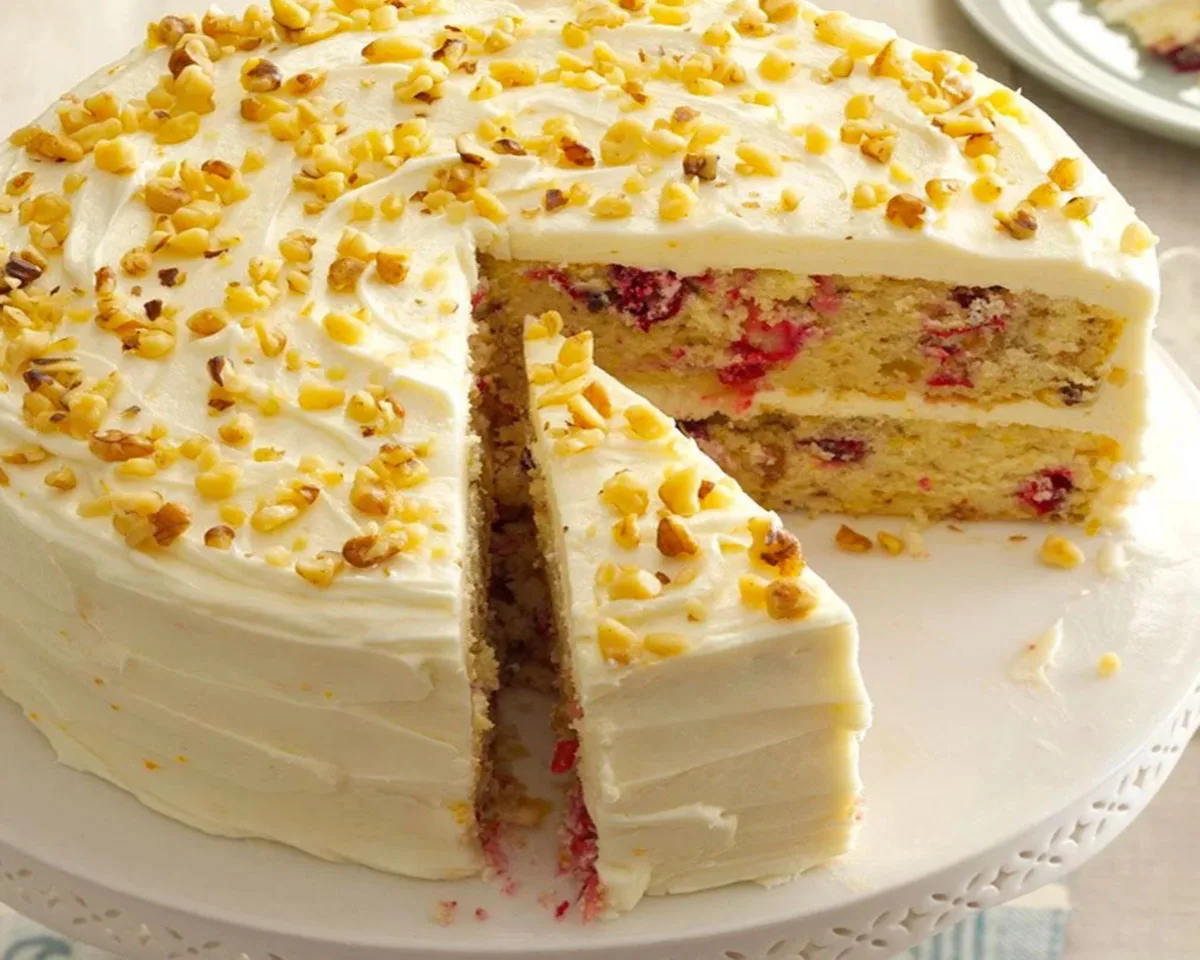
Nothing captures the magic of the holiday season quite like a vibrant Cranberry Layer Cake sitting at the center of a crowded dinner table. I remember my first attempt at this recipe during a particularly snowy December when my family gathered for our annual gift exchange. The house smelled of fresh citrus and toasted walnuts, creating an atmosphere that felt cozy and inviting for everyone. When I finally sliced into that first Cranberry Layer Cake, the bright red berries against the white crumb looked like edible ornaments. My grandmother, who usually critiques every dessert, actually asked for a second piece before I could even sit down. You really don’t need a professional bakery when you can create a masterpiece like this Cranberry Layer Cake right in your own kitchen. Furthermore, the combination of tart cranberries and sweet orange zest provides a flavor profile that keeps people talking long after the party ends. I find that this Cranberry Layer Cake bridges the gap between traditional winter flavors and modern culinary elegance. Every time I bake this Cranberry Layer Cake, I feel a sense of pride as the layers come together perfectly. Consequently, it has become my most requested holiday tradition for friends and neighbors alike. You will love how the moist cake layers interact with the silky cream cheese frosting in every single bite. Therefore, let’s dive into the details of making this stunning dessert your new favorite tradition.
Secrets to a Moist Cranberry Layer Cake Base
Achieving the perfect texture for a Cranberry Layer Cake requires a few clever tricks and high-quality ingredients. Most people worry about dry cakes, but this recipe utilizes canola oil and orange zest to ensure a tender crumb. You start with a standard white cake mix, which provides a reliable foundation for the more complex flavors. Moreover, the addition of fresh cranberries introduces moisture as they burst during the baking process. This interaction creates a beautiful, marbled effect throughout the cake while keeping the interior incredibly soft. Consequently, you get a dessert that feels light and airy rather than dense or heavy. You should always use room-temperature eggs to ensure they emulsify perfectly with the oil and water. Therefore, your batter will maintain a consistent structure that supports the heavy fruit and nuts without sinking.
Folding in Fresh Cranberries and Walnuts
Texture plays a vital role in the success of a Cranberry Layer Cake, so you must handle your add-ins with care. After you beat the batter for exactly two minutes, you gently stir in the coarsely chopped cranberries and finely chopped walnuts. This manual step prevents the fruit from breaking down too much before the cake hits the oven heat. Additionally, the walnuts provide a necessary earthy crunch that balances the tartness of the berries. You want every slice to contain an even distribution of these festive ingredients for the best experience. Notably, using fresh cranberries ensures a brighter color and a more pronounced tang than dried versions. However, if you only have frozen berries, make sure you thaw and drain them thoroughly to prevent excess moisture. Consequently, your cake will maintain its beautiful shape and height after cooling.
The Importance of Proper Pan Preparation
You must prepare your baking pans correctly to ensure your Cranberry Layer Cake releases without any tears or breaks. I highly recommend lining the bottoms of two 9-inch round pans with parchment paper. Furthermore, you should grease both the pan and the paper to create a fail-safe non-stick surface. This attention to detail prevents the cranberries from sticking to the metal, which can happen if they sink toward the bottom. Once you pour the batter, you should tap the pans lightly on the counter to release any trapped air bubbles. Similarly, this step ensures an even rise so that your layers are flat and easy to stack later. If your layers come out even, you will spend much less time trimming them during the assembly phase. Therefore, starting with a well-prepared pan is the secret to a professional-looking finish.
Enhancing the Holiday Cranberry Cake Flavor Profile
The magic of a Cranberry Layer Cake lies in the harmony between its sweet and tart components. While the cranberries provide a bold acidity, the orange zest adds a floral brightness that elevates the entire dish. You should always use fresh zest rather than dried peel to capture the essential oils that provide the most aroma. Furthermore, the walnuts add a buttery richness that rounds out the sharper notes of the fruit. This combination of flavors makes the cake feel sophisticated and well-balanced for an adult palate. However, it remains sweet enough to satisfy the kids at the table, making it a true crowd-pleaser. Consequently, you can serve this at a formal dinner or a casual brunch with equal success. Notably, the flavors actually deepen if you let the cake sit for a few hours after frosting.
Using Orange Zest for Citrus Brightness
Orange and cranberry are a classic pairing for a reason, and they truly shine in this Cranberry Layer Cake. You incorporate one tablespoon of grated orange zest directly into the cake batter to infuse every bite with citrus. Additionally, you add another half teaspoon to the frosting to tie the two elements together seamlessly. This repetition of flavor ensures that the citrus notes aren’t lost beneath the sweetness of the sugar. You should use a microplane to get fine zest without including the bitter white pith of the fruit. Consequently, the aroma will hit your guests the moment you bring the cake into the room. This small detail transforms a standard box mix into a gourmet-tasting creation. Therefore, never skip the fresh orange zest if you want the best results.
Selecting the Best Walnuts for Crunch
The quality of your nuts significantly impacts the overall enjoyment of your Cranberry Layer Cake. You should choose fresh, high-quality walnuts and chop them finely to ensure they distribute evenly throughout the layers. If the pieces are too large, they might make the cake difficult to slice cleanly. Moreover, you can lightly toast the walnuts before adding them to the batter to enhance their nutty aroma. This extra step adds a layer of complexity that makes the cake feel more artisanal and handcrafted. You also save a portion of the walnuts to sprinkle over the finished frosting for a beautiful visual touch. Consequently, the crunch on the outside of the cake provides a preview of the textures hidden within. Therefore, the walnuts act as both a flavor enhancer and a decorative element.
Perfecting Cream Cheese Frosting for Your Cake
A rich and silky cream cheese frosting serves as the perfect companion to a tart Cranberry Layer Cake. You need a frosting that is sturdy enough to hold the layers together but soft enough to melt in your mouth. I always use a full 8-ounce package of softened cream cheese mixed with half a cup of butter. This ratio provides a stable base that won’t slide off the sides of your cake even in a warm room. Furthermore, the addition of vanilla extract and orange zest ensures that the frosting isn’t just sweet, but also flavorful. You should beat the ingredients until they are completely smooth and free of any lumps. Consequently, the white frosting provides a stunning contrast to the ruby-red berries peeking through the cake.
Achieving the Right Frosting Consistency
Consistency is everything when you are working with a Cranberry Layer Cake that has multiple layers. You gradually beat in three and a half cups of confectioners’ sugar until the frosting reaches a spreadable thickness. If the frosting feels too soft, you can add a little more sugar, but be careful not to make it too stiff. Additionally, you must ensure your butter and cream cheese are perfectly softened before you begin. Cold ingredients will create a grainy texture that is difficult to smooth over the sides of the cake. However, if you follow the steps correctly, you will have a glossy finish that looks like it came from a professional shop. Notably, the orange zest in the frosting helps cut through the richness of the dairy. Consequently, the frosting feels indulgent without being cloying or overwhelming.
Balancing Sweetness with Vanilla and Citrus
The flavor of your frosting should complement the Cranberry Layer Cake rather than competing with it. You use a teaspoon of vanilla extract to provide a warm, floral base that ties the cream cheese and sugar together. Meanwhile, the orange zest provides a sharp finish that cleanses the palate after each bite. This balance is crucial because a cake with this many layers needs a frosting that can stand up to its bold fruit. Furthermore, you should taste the frosting as you go and adjust the sugar according to your preference. Some people like a tangier frosting, while others prefer something more traditional and sweet. Therefore, you have the flexibility to customize the final taste to suit your family’s needs. Consequently, your Cranberry Layer Cake will be perfectly tailored to your specific audience.
Tips for Assembling a Multi-Layer Cake
Assembling a Cranberry Layer Cake can feel intimidating, but a few simple techniques will help you succeed. You must allow your cake layers to cool completely on a wire rack before you even think about frosting them. If the cakes are still warm, the cream cheese frosting will melt and create a slippery mess. Furthermore, you should discard the parchment paper carefully to keep the edges of the cake smooth and intact. Once the cakes are cold, you place the first layer on your serving plate and spread a generous amount of frosting over the top. Then, you carefully place the second layer on top, ensuring it is centered and level. Consequently, your cake will have a professional height and a stable structure that survives the trip to the table.
Layering Frosting and Toppings Evenly
When you apply the frosting to your Cranberry Layer Cake, start with a thin “crumb coat” to seal in any loose pieces of cake. This step ensures that the final outer layer of frosting remains perfectly white and clean. Additionally, you should use an offset spatula to smooth the frosting over the top and down the sides for a sleek look. Once the cake is fully covered, you can sprinkle the remaining walnuts over the top and around the base. This adds a rustic charm that highlights the natural ingredients used inside the cake. Moreover, the nuts help hide any small imperfections in your frosting technique. Therefore, you don’t need to be a master decorator to produce a beautiful result. Consequently, the finished Cranberry Layer Cake will look as though it took hours of painstaking effort.
Storing Your Cake for Long-Lasting Freshness
Because this Cranberry Layer Cake contains cream cheese and fresh fruit, you must store it correctly in the refrigerator. I suggest using a cake dome or a large airtight container to prevent the frosting from picking up any odors from other foods. Furthermore, the cold environment helps the layers stay moist and firm, making the cake even easier to slice the next day. You should take the cake out of the fridge about thirty minutes before serving to let the frosting soften slightly. However, don’t leave it out for too long, as the cream cheese can become overly soft in a warm kitchen. Notably, the tartness of the cranberries remains vibrant even after a few days of storage. Consequently, you can enjoy leftovers for breakfast or a late-night snack for several days. Therefore, this cake is as practical as it is delicious.
| Ingredient Category | Component | Measurement |
| Cake Base | White Cake Mix | 1 Package |
| Cake Base | Fresh/Thawed Cranberries | 1 Cup |
| Cake Base | Chopped Walnuts | 1 Cup |
| Cake Base | Orange Zest | 1 Tablespoon |
| Frosting | Cream Cheese | 8 Ounces |
| Frosting | Butter | 1/2 Cup |
| Frosting | Confectioners’ Sugar | 3.5 Cups |
Frequently Asked Questions
Can I use dried cranberries instead of fresh ones?
While you can technically use dried cranberries, the result will be quite different from the traditional Cranberry Layer Cake. Dried berries lack the moisture and tartness of fresh ones, which means the cake might feel a bit drier. Furthermore, the fresh berries provide a stunning visual pop that dried berries cannot replicate. If you must use dried, I recommend soaking them in a little orange juice first to plump them up. Consequently, your cake will still have a hint of that signature cranberry flavor.
What is the best way to chop cranberries without a mess?
Cranberries are notoriously bouncy, so they can fly all over your kitchen if you aren’t careful. I suggest using a food processor and pulsing them a few times until they reach a coarse chop. Alternatively, you can place them in a plastic bag and use a rolling pin to crush them slightly. Additionally, make sure the berries are dry before you start chopping to prevent them from slipping on your cutting board. Therefore, you will save time and keep your workspace much cleaner.
Why did my walnuts sink to the bottom of the cake?
If your walnuts or cranberries sink, it usually means your batter was too thin or the pieces were too large. You should chop the nuts finely and ensure you beat the cake mix for the full two minutes to build enough structure. Furthermore, you can toss the chopped fruit and nuts in a tablespoon of dry cake mix before folding them into the batter. This light coating helps the ingredients “grip” the batter and stay suspended during the bake. Consequently, every slice of your Cranberry Layer Cake will be perfectly balanced.
How do I make the frosting more stable for a warm room?
If you are serving the cake in a warm environment, you can increase the amount of confectioners’ sugar slightly to stiffen the frosting. Additionally, make sure you use full-fat brick cream cheese rather than the spreadable kind from a tub. Tub cream cheese contains more water, which can lead to a runny frosting that won’t hold its shape. Moreover, keeping the cake chilled until the last possible moment will ensure the structure stays sound. Therefore, you can confidently display your masterpiece at any party.
Conclusion
The Cranberry Layer Cake remains one of the most delightful ways to celebrate the flavors of the harvest season. By combining the natural tartness of fresh berries with a rich, citrus-infused frosting, you create a dessert that appeals to every sense. It is a dish that honors traditional holiday ingredients while offering a modern, elegant presentation that impresses every guest. I hope this guide gives you the confidence to bake your own Cranberry Layer Cake and share it with your loved ones this year. You will find that the effort is well worth the rewards when you see the joy it brings to your holiday table. Happy baking, and may your season be filled with sweet memories and even sweeter treats!
Full recipe:
Ingredients:
– 1 package white cake mix (regular size)
– 1-1/3 cups water
– 3 large eggs, room temperature
– 1/3 cup canola oil
– 1 tablespoon grated orange zest
– 1 cup fresh or thawed and coarsely chopped cranberries
– 1 cup finely chopped walnuts
Cream Cheese Frosting:
– 1 package (8 ounces) cream cheese, softened
– 1/2 cup butter, softened
– 1 teaspoon vanilla extract
– 3-1/2 cups confectioners’ sugar
– 1/2 teaspoon grated orange zest
– 1/4 cup finely chopped walnuts
 Directions:
1. Preheat the oven to 350°F. Line the bottoms of two greased 9-inch round baking pans with parchment paper and grease the paper.
2. In a large bowl, combine the first five ingredients. Beat on low speed for 30 seconds, then on medium for 2 minutes. Stir in cranberries and walnuts. Transfer the batter to the prepared pans.
3. Bake for 30-35 minutes or until a toothpick inserted in the center comes out clean. Allow the cakes to cool in the pans for 10 minutes before removing to wire racks; discard the paper. Let them cool completely.
4. For the frosting, in a large bowl, beat the cream cheese, butter, and vanilla until blended. Gradually beat in the confectioners’ sugar and orange zest until smooth.
5. Spread the frosting between the layers and over the top and sides of the cake. Sprinkle with walnuts. Refrigerate any leftovers.