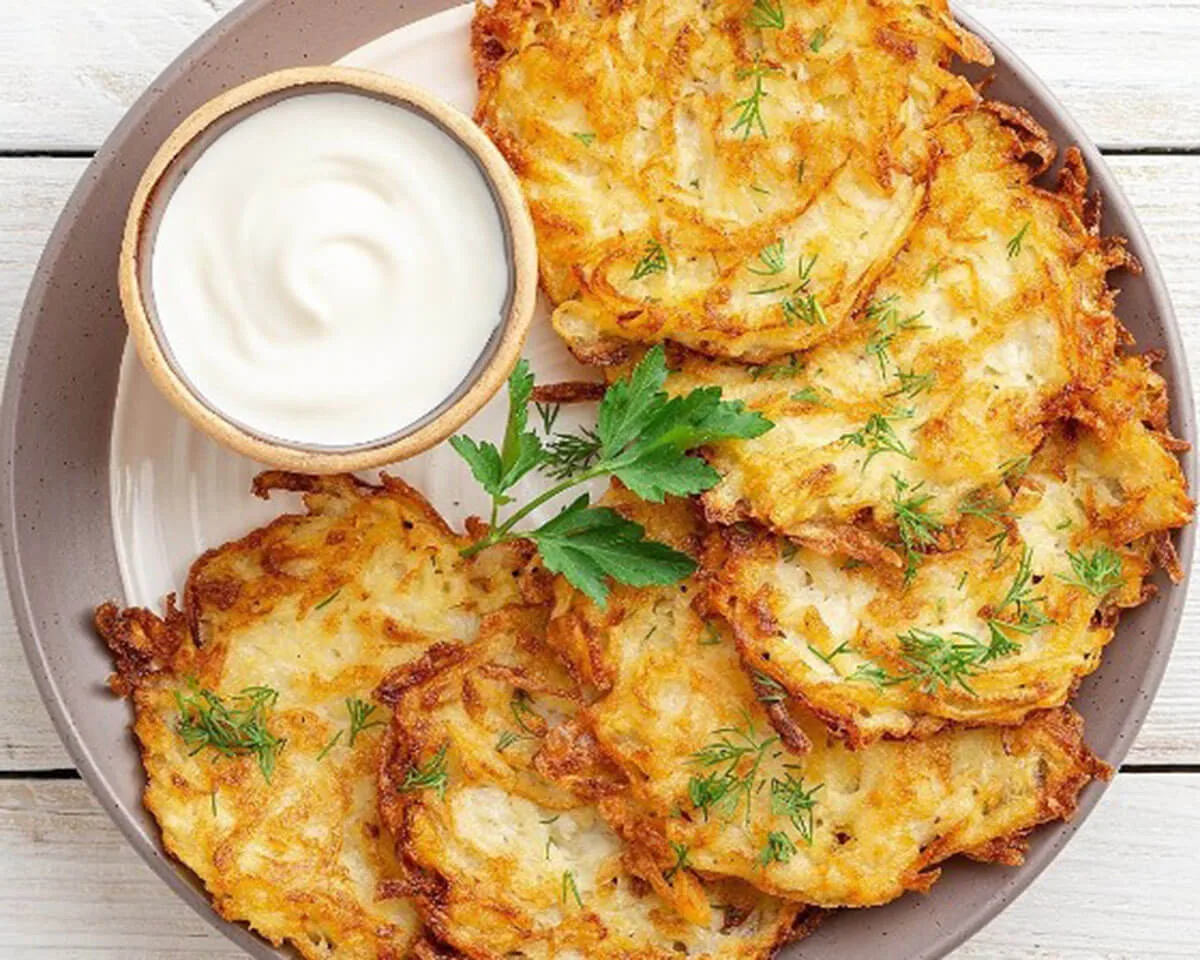
The crisp evening air at the Munich Christmas market is something I will never forget. I remember standing by a small wooden stall, my hands wrapped around a paper plate of steaming “Kartoffelpuffer,” while the scent of frying oil and sweet applesauce filled the breeze. My first bite was a revelation—the crunch was so loud it almost drowned out the holiday music! These pancakes are a staple of my winter kitchen now, and every time I grate a potato, I am transported back to that festive glow. I’ve learned that the secret isn’t just in the ingredients, but in the technique used to get that perfect, lacy edge. If you want a dish that feels like a warm hug on a cold day, you’ve found it. This German potato pancakes recipe is simple, nostalgic, and guaranteed to disappear from the plate in seconds. It’s the kind of food that brings people together, reminding us that the best flavors often come from the most humble beginnings.
The Secret to the Best German Potato Pancakes Recipe
Mastering the art of Kartoffelpuffer requires a bit of muscle and the right variety of spud. This German potato pancakes recipe relies on the high starch content of Russet potatoes to achieve that signature golden-brown finish. While some modern versions use mashed potatoes, the authentic German method always starts with raw, grated tubers. This creates a unique texture that is shredded and crispy on the outside while remaining soft and tender in the middle. When you combine them with sharp white onion and eggs, you create a savory batter that is far more flavorful than a standard hash brown.
Why Moisture Removal is Crucial
The biggest enemy of a crispy pancake is water. Potatoes are naturally full of liquid, and if you don’t remove it, your pancakes will be soggy and greasy rather than light and crunchy. After you grate your potatoes and onions, you must let them sit in a strainer. I highly recommend using a clean kitchen towel or a handful of sturdy paper towels to squeeze the mixture with all your might. You will be shocked at how much liquid comes out! This extra effort is what separates a mediocre pancake from a truly spectacular one.
Essential Ingredients for Perfect Binding
To keep your pancakes from falling apart in the hot oil, you need a strong binder. This recipe uses a combination of beaten eggs and potato starch. While some people use all-purpose flour, potato starch is the secret weapon for a gluten-free-friendly bind that results in a much crispier exterior. The starch works with the natural proteins in the eggs to glue the potato shreds together, ensuring they hold their disk shape as they hit the skillet. Don’t forget a generous teaspoon of sea salt to draw out the natural sweetness of the white onion.
Frying Techniques for a Golden Finish
[A wide skillet showing three golden-brown potato pancakes sizzling in oil alongside a bowl of fresh applesauce.]
Frying is where the magic happens. You aren’t just heating the food; you are developing a complex crust that provides the structural integrity for the pancake. The choice of oil and the temperature of your pan will determine whether your pancakes are a success. You want enough oil to shallow-fry the disks, giving them that deep, even color that makes them look like golden suns on your plate.
Choosing the Right Oil and Temperature
Canola oil is the ideal choice for this German potato pancakes recipe because it has a high smoke point and a neutral flavor. You want the oil to shimmer before you add the first scoop of batter. If the oil is too cold, the potatoes will soak it up like a sponge and become heavy. If it’s too hot, the outside will burn before the middle is cooked through. Aim for a medium-high heat that produces a steady, cheerful sizzle the moment the potato mixture touches the surface.
Shaping and Flipping for Success
Use a large spoon or a measuring cup to drop about a quarter-cup of the mixture into the hot oil. Immediately use the back of the spoon to flatten it into a disk about three inches wide. This ensures the heat can penetrate to the center quickly. Cook the first side for about three to four minutes until the edges look dark and lacy. When you flip them, you should see a beautiful, uniform golden-brown crust. The second side usually takes slightly less time—about three minutes—to reach perfection.
Serving and Cultural Traditions
In Germany, Kartoffelpuffer are more than just a side dish; they are a versatile meal that straddles the line between sweet and savory. Depending on the region, you might see them served in very different ways. This German potato pancakes recipe provides a neutral savory base that acts as a canvas for whatever toppings you prefer. It’s a dish that works just as well for a Sunday brunch as it does for a quick weeknight dinner.
| Traditional Topping | Flavor Profile | Occasion |
| Applesauce (Apfelmus) | Sweet & Tart | Classic Market Style |
| Sour Cream | Rich & Tangy | Savory Dinner Side |
| Smoked Salmon | Salty & Sophisticated | Elegant Brunch |
| Sugar & Cinnamon | Sweet & Spiced | Dessert or Snack |
Pairing with Classic Accompaniments
The most traditional way to enjoy these is with a side of chilled applesauce. The contrast between the hot, salty potato and the cool, sweet fruit is a hallmark of German comfort food. If you prefer a strictly savory experience, a dollop of thick sour cream or even a bit of herbed quark is delicious. In some northern regions, people even serve them on top of a slice of dark rye bread. For a more modern twist, try pairing them with a crisp green salad to cut through the richness of the fried potato.
Keeping Pancakes Warm for a Crowd
If you are cooking for a large family, you don’t want the first batch to get cold while you finish the last one. As you remove the pancakes from the skillet, place them on a baking sheet lined with paper towels to drain the excess oil. Then, transfer them to a wire rack set over a baking sheet in a 200°F oven. The wire rack allows air to circulate, preventing the bottoms from becoming soggy while they wait. This keeps every pancake “market-fresh” and ready to serve at the same time.
Storage, Reheating, and Expert Tips
Potato pancakes are definitely best served immediately, but life happens, and sometimes you have leftovers. Because these are starch-heavy, they can become quite firm once they cool down. However, with the right reheating method, you can bring back a surprising amount of that original “crunch” without much effort.
How to Reheat Without Sogginess
Avoid the microwave at all costs! A microwave will turn your beautiful crispy pancakes into rubbery disks. Instead, the best way to reheat leftovers is in a dry non-stick skillet over medium heat. This helps recrisp the edges and warms the center gently. Alternatively, you can pop them into a toaster oven or an air fryer at 350°F for about three to five minutes. They will crisp up beautifully, almost as if they were just fried.
Tips for Bulk Grating and Prep
If you are making a double batch, your grated potatoes might start to turn a pinkish-gray color—this is just natural oxidation and won’t hurt the flavor. To prevent this, you can grate the potatoes directly into a bowl of cold water with a splash of lemon juice. Just remember to drain and squeeze them extra thoroughly before mixing with the other ingredients. Using a food processor with the grating attachment can also save you a lot of time and protect your knuckles if you are feeding a crowd!
Frequently Asked Questions
Why are my potato pancakes falling apart?
This usually means there is too much moisture in the batter or not enough binder. Make sure you squeeze the potatoes until they are very dry and don’t skip the potato starch. If the mixture still feels too loose, you can add an extra tablespoon of starch or flour to help it hold together.
Can I use a different type of potato?
While Russets are best for crispiness, Yukon Golds can be used for a creamier, more buttery interior. Avoid waxy red potatoes, as they don’t have enough starch to create a good crust and may result in a gummy texture.
Is it possible to make these vegan?
Yes, you can replace the eggs with a commercial egg replacer or a “flax egg” (ground flaxseed mixed with water). Since the eggs provide most of the binding, you might need to add a little extra potato starch or flour to ensure the pancakes stay together in the pan.
Can I freeze German potato pancakes?
Absolutely. Freeze them in a single layer on a baking sheet first, then transfer them to a freezer-safe bag with parchment paper between the layers. You can reheat them directly from frozen in a 400°F oven for about 10-12 minutes until they are sizzling and hot.
Conclusion
Bringing the flavors of a German Christmas market into your home is easier than you think. This German potato pancakes recipe proves that with a few pounds of potatoes and a little patience, you can create a world-class comfort food. Whether you serve them sweet with applesauce or savory with sour cream, these pancakes are sure to become a favorite in your household. There is something deeply satisfying about the process of grating, squeezing, and frying until you reach that perfect golden hue. I hope this recipe brings a bit of European magic to your table and fills your kitchen with the wonderful aroma of frying potatoes. Grab your grater, start squeezing those spuds, and enjoy every crispy, savory bite of this timeless classic.
Full recipe:
Ingredients:
- 2 and a half pounds of Russet Potatoes
- 3 beaten eggs
- 1 white onion
- 1 tsp sea salt
- 1/2 cup potato starch
- Canola oil
How to Make:
- Peel and grate the potatoes and onion. Place them in a strainer to drain excess water. Allow them to rest for about 10 minutes. You can use a paper towel to squeeze out additional water if you’re in a hurry.
- Transfer the mixture of potatoes and onions to a bowl. Add salt and beaten eggs. Mix well while incorporating the potato starch.
- Heat a skillet with about half a cup of canola oil. Take a scoop of the mixture, shape it into a small disk (approximately 3 inches in diameter), and flatten it. Cook about 3/4 of the pancakes at a time.
- Cook for a few minutes until golden brown, then flip and cook on the other side for about 3 minutes. Repeat until the entire mixture is used, adding a little more oil between batches if necessary.
- Once finished, remove the pancakes from the skillet and let them drain on a baking sheet lined with a paper towel to remove excess oil. Serve warm and enjoy plain or with applesauce!
These potato pancakes are a delicious and comforting dish, perfect for breakfast or as a side dish.