
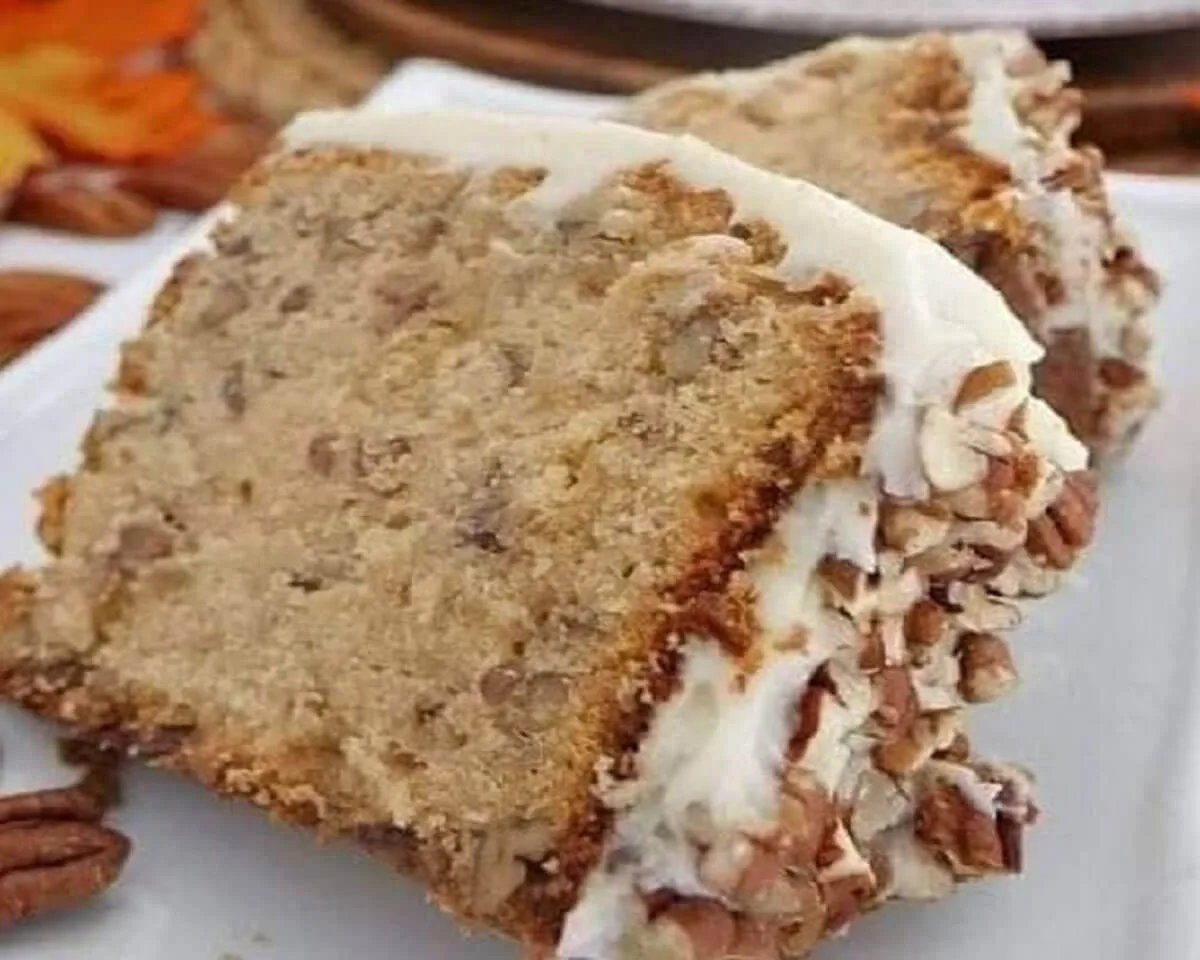
Some recipes find you at exactly the right moment, and pecan layer cake found me during the most chaotic birthday party prep I’ve ever attempted. My mother-in-law had casually mentioned that pecan cake was her absolute favorite dessert sometime in early October, and I’d tucked that information away like a secret weapon. Her birthday arrived in November, and I decided to go all in. I toasted those pecans in butter until the entire kitchen smelled like a Southern bakery, creamed the batter until it turned pale and fluffy, and stacked three gorgeous layers with enough frosting between them to make a pastry chef proud. When I carried that finished pecan layer cake to the table with its candles glowing against all that creamy frosting, my mother-in-law actually pressed her hand to her chest. She took one bite, set her fork down deliberately, and said it was the best cake she’d ever tasted in her life. Pecan layer cake has that kind of dramatic, unforgettable effect on people. It’s the cake that earns the kind of silence at the table that means everyone is too busy experiencing pure happiness to bother saying anything out loud.
Pecan Layer Cake: Understanding What Makes This Classic Cake So Extraordinary
Pecan layer cake occupies a special category in the world of American baking. It’s simultaneously approachable and impressive, familiar and completely distinct from anything else on a dessert table. Understanding its character before you begin baking makes every step feel more purposeful and satisfying.
Why Toasted Pecans Are the Entire Heart of This Recipe
Most cake recipes treat nuts as an afterthought, something you fold in at the end without much ceremony. Pecan layer cake treats its nuts as the absolute star of the entire production, and the toasting step is where that starring role truly begins. Raw pecans carry a pleasant but somewhat muted flavor that gets easily overwhelmed by butter, sugar, and vanilla in a rich cake batter. Toasting them in butter at 350 degrees Fahrenheit for 20 to 25 minutes transforms them entirely. The dry heat drives off surface moisture, caramelizes the natural sugars within the nut, and deepens the buttery, slightly smoky flavor that makes pecans so uniquely compelling in baked goods. Furthermore, toasting in butter rather than dry-toasting in an empty pan coats each pecan in a thin layer of golden, flavorful fat that clings to the nut throughout the baking and frosting process. Every bite of finished cake delivers that intensified, caramelized pecan flavor rather than a bland, raw nut note that disappears into the surrounding sweetness. Additionally, dividing the toasted pecans between the cake batter and the frosting ensures that pecan flavor permeates the entire dessert from inside out, creating a coherent, unified flavor story across every single layer.
The Science Behind a Three-Layer Cake Structure
Three layers might seem like ambition for ambition’s sake, but the structure serves a genuinely functional purpose beyond visual drama. A three-layer cake creates two interior frosting planes rather than one, which means each slice contains a higher ratio of frosting to cake than a standard two-layer version. Since the pecan-studded frosting carries so much of the recipe’s flavor complexity, more frosting per bite translates directly into a more satisfying, more intensely flavored eating experience. Furthermore, three thinner layers bake more evenly and more quickly than two thicker ones, which reduces the risk of dry edges surrounding an underdone center. Each 9-inch round bakes in just 25 to 30 minutes, a window short enough to keep the crumb moist while still achieving a fully set, clean center. The visual impact of three distinct layers visible in each slice also communicates homemade craftsmanship in a way that immediately impresses anyone who receives a piece, which is exactly the effect a cake this beautiful deserves to create.
Complete Ingredients and Step-by-Step Instructions for Pecan Layer Cake
This recipe divides cleanly into two components: the pecan-studded cake layers and the buttery pecan frosting. Working through each in order produces a result that looks and tastes genuinely professional.
Full Ingredients at a Glance
| Component | Ingredient | Quantity |
|---|---|---|
| Cake | Butter, softened, divided | 1 1/4 cups |
| Cake | Baking powder | 2 teaspoons |
| Cake | Chopped pecans | 2 2/3 cups |
| Cake | Vanilla extract | 2 teaspoons |
| Cake | All-purpose flour | 3 cups |
| Cake | Salt | 1/2 teaspoon |
| Cake | Sugar | 2 cups |
| Cake | Milk | 1 cup |
| Cake | Eggs | 4 |
| Frosting | Confectioners’ sugar | 8 to 8 1/2 cups |
| Frosting | Evaporated milk | 5 oz can |
| Frosting | Vanilla extract | 2 teaspoons |
| Frosting | Butter, softened | 1 cup |
Step-by-Step Baking Instructions
Start by preheating your oven to 350 degrees Fahrenheit. Place the chopped pecans and one quarter cup of the softened butter in a baking pan and slide it into the oven. Toast the pecans for 20 to 25 minutes, stirring frequently to ensure even browning and prevent burning. Remove the pan from the oven and set the toasted pecans aside to cool completely. While the pecans cool, grease and flour three 9-inch round baking pans thoroughly, making sure to coat both the bottoms and sides. In a large mixing bowl, cream the remaining one cup of softened butter together with the granulated sugar using an electric mixer on medium speed until the mixture turns noticeably pale, light, and fluffy. This creaming process takes about four to five minutes and is critical for incorporating air into the batter that produces a tender, even crumb. Add the four eggs one at a time, beating well after each addition before adding the next. Stir in the vanilla extract. In a separate bowl, whisk together the all-purpose flour, baking powder, and salt until evenly combined. Add this dry mixture to the creamed butter mixture alternately with the milk, beginning and ending with the flour mixture and beating well after each addition. Stir in one and one third cups of the toasted pecans using a wooden spoon or rubber spatula. Divide the batter as evenly as possible among the three prepared baking pans and bake for 25 to 30 minutes until a toothpick inserted near the center of each layer comes out clean. Cool the layers in their pans for 10 minutes, then turn them out onto wire racks and allow them to cool completely before frosting. For the frosting, beat the softened butter and confectioners’ sugar together in a large bowl until combined, then add the evaporated milk and vanilla extract and beat until the frosting turns smooth, creamy, and spreadable. Fold in the remaining toasted pecans. Spread the frosting generously between each cake layer and across the top and sides of the assembled cake.
Pro Tips for Baking a Pecan Layer Cake That Looks and Tastes Stunning
A recipe with multiple components rewards careful attention at each stage. These practical tips address the most common challenges and help you approach every step with genuine confidence.
The Most Important Techniques for Getting Each Element Right
First, make absolutely sure all your refrigerated ingredients reach true room temperature before you begin mixing. Butter and eggs straight from the refrigerator don’t cream or emulsify properly, which produces a dense, uneven batter that bakes into a heavy cake. Set them out at least one hour in advance. Second, don’t rush the creaming of butter and sugar. Four to five full minutes of beating on medium speed is necessary to incorporate enough air for a genuinely light, tender crumb. The mixture should look almost white and feel very light before you add the eggs. Third, alternate the dry ingredients and milk in the correct order, beginning and ending with the flour mixture. This approach ensures the gluten develops evenly without becoming overdeveloped from too much liquid hitting the batter at once, which would produce a tough, chewy cake. Furthermore, weigh your batter when dividing it among the three pans rather than eyeballing it. Equal batter weights produce equal layer thicknesses, which makes stacking and frosting dramatically easier and produces a more professional-looking finished cake. Finally, ensure the cake layers are completely cold before applying any frosting. Even slightly warm layers cause the frosting to soften and slide rather than holding its shape cleanly between and around the tiers.
Creative Variations That Honor the Classic Recipe
Once you feel completely comfortable with the standard version, several variations open up genuinely exciting creative possibilities. Add a half teaspoon of ground cinnamon and a quarter teaspoon of ground nutmeg to the dry ingredients for a warm spice note that complements the toasted pecans beautifully and gives the cake a more distinctly autumnal character. For a caramel pecan layer cake variation, replace the standard frosting with a homemade salted caramel buttercream by adding three tablespoons of caramel sauce and a half teaspoon of sea salt to the basic frosting recipe. The caramel deepens the toasted nut flavor in a way that makes the entire cake taste even more complex and indulgent. Alternatively, brush each cooled cake layer with a thin coating of bourbon before frosting to introduce a warm, smoky undertone that pairs exceptionally well with both the buttery pecans and the sweet frosting. Moreover, garnishing the finished cake with whole toasted pecan halves arranged in a decorative pattern around the top edge transforms an already beautiful cake into something that looks genuinely spectacular on a holiday or celebration table.
Serving, Storing, and Presenting Your Pecan Layer Cake
A three-layer pecan cake deserves a presentation that honors the effort and care that went into creating it. Thoughtful serving and storage choices ensure every slice looks and tastes as impressive as the first.
How to Display and Serve This Cake at Its Best
Always present pecan layer cake on a cake stand that elevates it above the table surface and allows everyone to appreciate the full height and visual drama of three stacked layers. A white ceramic cake stand creates a clean contrast against the golden-brown frosting and visible pecan pieces that stud the surface. For an especially polished look, press additional whole toasted pecan halves in a decorative ring around the top edge of the cake immediately after frosting while the surface is still slightly soft and receptive. Use a long, sharp knife warmed under hot water and dried between cuts to produce the cleanest possible slices that reveal those beautiful interior layers without tearing or dragging the frosting. Pecan layer cake pairs exceptionally well with a scoop of vanilla ice cream, a drizzle of warm caramel sauce, or simply a strong cup of coffee or hot tea that balances the frosting’s sweetness without competing with the pecan’s natural character.
Storage Guidelines and Make-Ahead Strategy
Store pecan layer cake covered at room temperature for up to three days in a cool environment. The butter-rich frosting and moist crumb both benefit from resting overnight, as the flavors meld and deepen significantly between baking day and the following afternoon. For longer storage, refrigerate the cake for up to one week, covered loosely with plastic wrap to prevent the frosting from absorbing refrigerator odors. Allow refrigerated slices to return to room temperature for 20 to 30 minutes before serving, as cold frosting dulls the flavor and produces a denser mouthfeel than room-temperature frosting. For make-ahead preparation, bake and cool the cake layers up to two days in advance, wrap each layer tightly in plastic wrap, and store them at room temperature. Prepare the frosting the day of assembly for the smoothest, most spreadable consistency. You can also freeze the unfrosted cake layers for up to three months wrapped in plastic and foil, thawing them overnight in the refrigerator before assembling and frosting the finished cake.
Frequently Asked Questions
Can I use pre-chopped store-bought pecans or should I chop them myself? Both work well in this recipe. Store-bought pre-chopped pecans save time and produce consistent results. However, chopping whole pecan halves yourself gives you more control over the size of the pieces, which allows you to create varied textures in both the batter and the frosting. Larger pieces in the frosting create more satisfying crunch, while finer pieces distribute more evenly throughout the cake batter.
Why does the recipe divide the pecans between the batter and the frosting? Dividing the toasted pecans between both components ensures that pecan flavor appears in every element of the cake rather than concentrating in just one layer. The pecans in the batter contribute flavor and texture to the crumb itself, while the pecans in the frosting create crunch and visual interest across every frosted surface the cake presents.
Can I make this cake as two layers instead of three? Yes, but adjust the baking time upward to approximately 35 to 40 minutes to account for the increased batter depth in each pan. Check for doneness with a toothpick rather than relying on timing alone, as oven temperatures and pan materials vary. The finished cake will be slightly denser and contain less frosting per slice than the three-layer version.
My frosting seems too thick to spread smoothly. How do I fix it? Add the evaporated milk one teaspoon at a time while beating on medium speed until the frosting reaches a smooth, spreadable consistency. Temperature also affects frosting spreadability significantly. If your kitchen is cool, the butter in the frosting may be firmer than ideal. Let the frosting sit at room temperature for 15 minutes and beat it briefly again before applying it to the cake layers.
How do I prevent my cake layers from doming in the center during baking? Wrap the outside of each filled pan with damp baking strips before putting them in the oven. These strips slow the rate at which the pan’s edges heat up relative to the center, which produces a more even rise across the entire surface. Alternatively, slightly reduce the oven temperature to 325 degrees Fahrenheit and extend the baking time by 8 to 10 minutes for a flatter, more even layer.
Conclusion
Pecan layer cake is the kind of recipe that asks for your full attention and rewards every bit of it with a result that genuinely stops people mid-conversation. Three buttery, pecan-studded layers stacked generously with creamy, nut-filled frosting create a cake that belongs at every celebration table, from holiday gatherings to birthday parties to Sunday dinners that deserve something extraordinary. The toasting step takes twenty minutes. The creaming takes five. The assembly takes patience. But that first slice, with its visible layers, its glossy frosting, and that deeply satisfying crunch of caramelized pecan in every single bite, makes absolutely every moment of effort feel like the best investment you’ve ever made in your kitchen. So preheat your oven, melt that butter, and start toasting those pecans. Something genuinely spectacular is about to come out of your oven.
Full recipe:
Ingredients:
**Cake:**
– 1-1/4 cups butter, softened, divided
– 2 teaspoons baking powder
– 2-2/3 cups chopped pecans
– 2 teaspoons vanilla extract
– 3 cups all-purpose flour
– 1/2 teaspoon salt
– 2 cups sugar
– 1 cup milk
– 4 eggs
**Frosting:**
– 8 to 8-1/2 cups confectioners’ sugar
– 1 can (5 ounces) evaporated milk
– 2 teaspoons vanilla extract
– 1 cup butter, softened
Directions:
1. **Toast Pecans:** Place pecans and 1/4 cup butter in a baking pan. Bake at 350°F for 20-25 minutes or until toasted, stirring frequently; set aside.
2. **Cream Butter and Sugar:** In a large bowl, cream sugar and the remaining butter until light and fluffy. Add eggs, one at a time, beating well after each addition. Stir in vanilla.
3. **Combine Dry Ingredients:** In a separate bowl, combine the flour, baking powder, and salt. Add this mixture to the creamed mixture alternately with milk, beating well after each addition.
4. **Add Pecans:** Stir in 1-1/3 cups of toasted pecans.
5. **Bake the Cake:** Pour the batter into three greased and floured 9-inch round baking pans. Bake at 350°F for 25-30 minutes or until a toothpick inserted near the center comes out clean. Cool for 10 minutes before removing from pans to wire racks to cool completely.
6. **Prepare Frosting:** For the frosting, cream butter and confectioners’ sugar in a large bowl. Add milk and vanilla; beat until smooth. Stir in the remaining toasted pecans.
7. **Frost the Cake:** Spread the frosting between layers and over the top and sides of the cake.
8. **Serve & Enjoy:** Slice and savor the irresistible combination of moist cake, toasted pecans, and creamy frosting.
Whether for a special occasion or a moment of self-indulgence, the Pecan Layer Cake is a testament to the joy of baking and the satisfaction of savoring a truly exceptional dessert. Immerse yourself in the pleasure of creating and relishing this culinary masterpiece – a celebration of flavor, texture, and the simple joy derived from the art of homemade baking.