
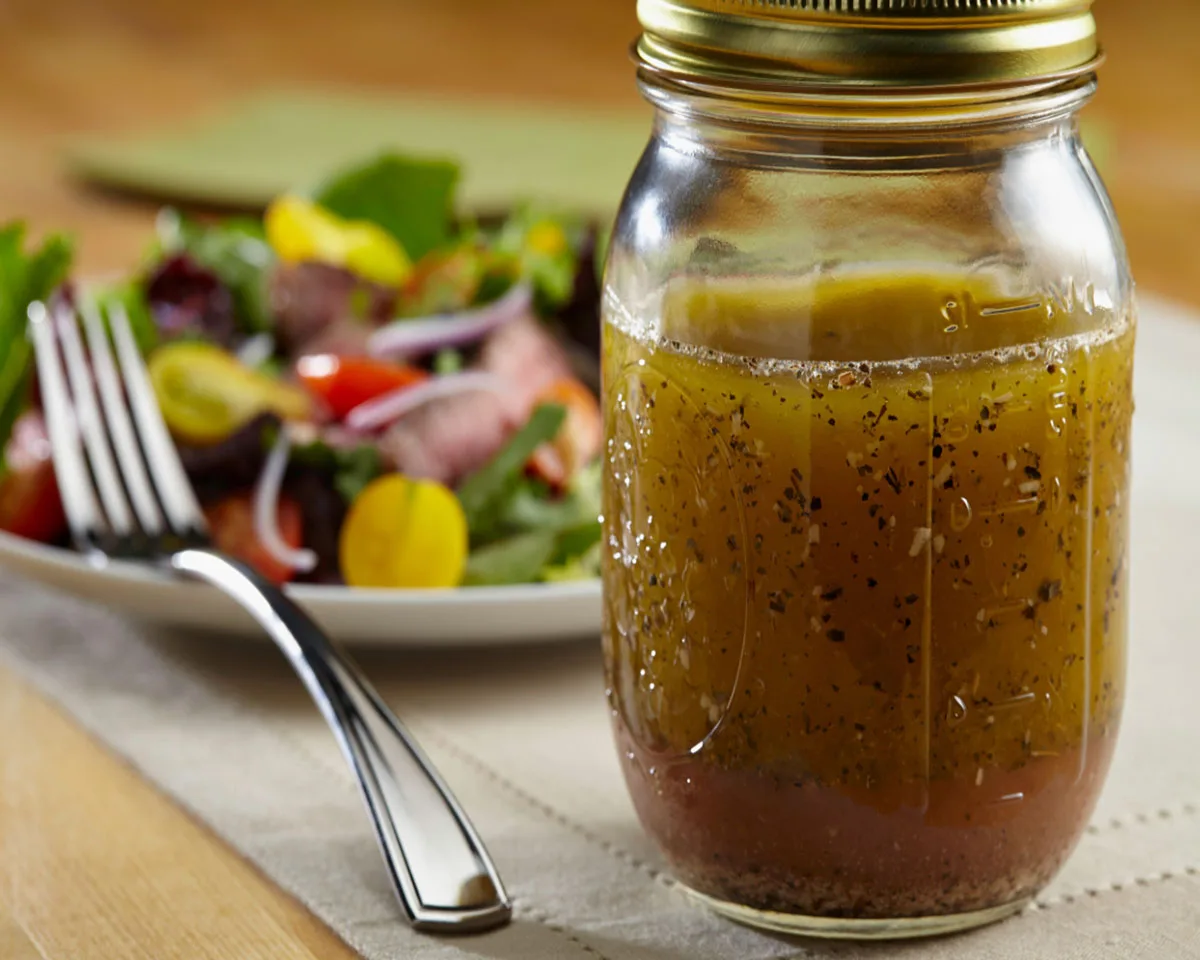
I still remember the day I tossed out my last store-bought Italian dressing bottle. I was making a simple pasta salad for a barbecue, and the dressing smelled like chemicals. I looked at the ingredient list and could not pronounce half of it. So I grabbed my olive oil, some vinegar, and a few dried herbs from my pantry. I threw in some Parmesan, a squeeze of lemon, and a drizzle of honey. I shook it all in a mason jar and took a taste. It was bright, herby, tangy, and slightly sweet. My husband asked, “Did you buy that somewhere fancy?” I laughed and said, “Nope. I made it in two minutes.” That day, homemade Italian dressing became a permanent resident in my fridge. Since then, I have used this homemade Italian dressing on green salads, pasta salads, grilled chicken, roasted veggies, and even as a bread dip. It is fresher, cheaper, and more flavorful than anything from a supermarket shelf. This homemade Italian dressing takes five minutes to make, uses pantry staples, and stays good for a month. Let me show you why you will never buy bottled dressing again.
Part 1: Why Homemade Italian Dressing Beats the Bottled Stuff
Store-bought dressings are convenient, but they come with hidden costs. This homemade version puts you back in control.
Real Ingredients, Real Flavor
Bottled Italian dressing often contains soybean oil, high-fructose corn syrup, artificial flavors, and preservatives like potassium sorbate. You taste the chemicals more than the herbs. This homemade Italian dressing starts with extra-virgin olive oil, which adds a fruity, peppery richness. White wine vinegar provides a clean, sharp tang. Dried basil, oregano, and parsley deliver that classic Italian herb garden taste. Parmesan cheese adds a nutty, salty umami. A touch of honey balances the acidity. You can pronounce every single ingredient. And you can taste the difference immediately.
Healthier, Cheaper, and Customizable
You control the salt, the sweetness, and the oil quality. Use less salt or swap honey for sugar. Make it vegan by omitting the Parmesan or using nutritional yeast. Make it spicy by adding red pepper flakes. A bottle of high-quality store-bought dressing costs $5 to $8 and lasts a few weeks. This homemade Italian dressing costs about $3 to make a full 2 cups, and you likely already have most ingredients in your pantry. Plus, you avoid the plastic waste of another disposable bottle.
Part 2: Breaking Down the Ingredients
This recipe uses simple, shelf-stable ingredients. Each one plays a specific role. Understanding them helps you make smart swaps.
The Oil and Vinegar Base
Use one and a half cups of extra-virgin olive oil. Do not use regular olive oil or vegetable oil. Extra-virgin has a fruity, slightly bitter, peppery flavor that defines Italian dressing. If you find EVOO too strong, use a blend of half extra-virgin and half light olive oil. The vinegar is half a cup of white wine vinegar. It is milder and less sweet than balsamic. You can substitute red wine vinegar or champagne vinegar. Do not use distilled white vinegar. It is too harsh.
The Parmesan Cheese and Honey
A quarter cup of finely grated Parmesan cheese adds savory depth and a subtle creaminess. Use real Parmigiano-Reggiano, not the green can. Grate it on the fine side of a box grater. For a vegan version, omit the cheese or use two tablespoons of nutritional yeast. Two teaspoons of honey balance the acidity and add a gentle sweetness. Agave nectar or maple syrup also work. Do not skip the sweetener. It rounds out the sharpness of the vinegar.
The Herb and Spice Blend
Two tablespoons of dried parsley, two teaspoons of dried basil, and one teaspoon of dried oregano (the recipe shows a blank for oregano, but typical Italian dressing includes 1-2 teaspoons; I will add 1.5 teaspoons for completeness). These three herbs create the signature Italian flavor. Dried herbs are more concentrated than fresh, so do not substitute fresh unless you triple the amount. Two teaspoons of onion powder and one teaspoon of garlic powder add savory, aromatic depth without the moisture of fresh onion and garlic. One teaspoon of salt and half a teaspoon of freshly ground black pepper season the dressing.
The Lemon Juice
One and a half teaspoons of fresh lemon juice brightens the entire dressing. It adds a subtle citrus note that lifts the herbs and vinegar. Bottled lemon juice works, but fresh is better. Do not skip it. The lemon juice also helps emulsify the dressing.
Part 3: Step-by-Step Instructions and Storage
This dressing could not be easier to make. Follow these steps for a perfectly balanced result.
Mixing the Dressing
Use a medium-sized glass container with a lid, preferably one with a spout for pouring. Add one and a half cups of extra-virgin olive oil and half a cup of white wine vinegar. Add the grated Parmesan cheese, two tablespoons of dried parsley, one and a half teaspoons of lemon juice, two teaspoons of dried basil, one and a half teaspoons of dried oregano, two teaspoons of onion powder, two teaspoons of honey, one teaspoon of garlic powder, one teaspoon of salt, and half a teaspoon of black pepper. Secure the lid and shake vigorously for 30 seconds until emulsified. If you do not have a lid, whisk everything together in a bowl.
Tasting and Adjusting
Dip a piece of lettuce or a spoon into the dressing. Does it need more salt? More vinegar? More honey? Adjust to your taste. Remember that the flavors will meld and deepen after sitting in the fridge for a few hours. Do not over-salt. You can always add more later.
Storing and Using the Dressing
Transfer the dressing to a sealed jar or bottle. Store it in the refrigerator for up to one month. The olive oil will solidify when cold. That is normal. Before using, let the dressing sit at room temperature for 15 minutes, or run the jar under hot water for a minute. Shake vigorously for 10 to 15 seconds until the dressing re-emulsifies. Pour it over your favorite salads, pasta salads, or grilled vegetables. Use it as a marinade for chicken or shrimp. Drizzle it over roasted potatoes. Dip crusty bread into it. This homemade Italian dressing is incredibly versatile.
Part 4: Serving Suggestions and Creative Variations
This dressing shines in so many ways. Here is how to get the most out of every batch.
Best Ways to Serve
Toss it with a classic Italian salad: mixed greens, cherry tomatoes, cucumber slices, red onion, black olives, and pepperoncini. Use it as a marinade for grilled chicken breasts or pork chops. Let the meat sit in the dressing for 30 minutes before grilling. Drizzle it over a Caprese salad of fresh mozzarella, tomatoes, and basil. Toss it with warm pasta, cherry tomatoes, and fresh mozzarella for an instant pasta salad. Use it as a dipping sauce for breadsticks or focaccia.
Creative Variations to Try
Make a creamy Italian dressing by whisking in a quarter cup of mayonnaise or Greek yogurt. Make a spicy Italian dressing by adding half a teaspoon of red pepper flakes or a tablespoon of sriracha. Make a balsamic Italian dressing by replacing the white wine vinegar with balsamic vinegar. Add a tablespoon of Dijon mustard for extra tang and emulsification. Add a clove of fresh minced garlic instead of garlic powder for a sharper kick. Add a teaspoon of dried thyme or rosemary for more herb complexity.
How to Scale the Recipe
This recipe makes about 2 cups of dressing. Double it for a crowd. Halve it for a smaller batch. The proportions are easy to remember: three parts oil to one part vinegar, then adjust herbs and seasonings to taste. For a single serving, whisk together 3 tablespoons olive oil, 1 tablespoon vinegar, and a pinch of each herb and spice.
Homemade Italian Dressing FAQs
How long does homemade Italian dressing last in the fridge? Up to one month. The vinegar and salt act as natural preservatives. Always use a clean utensil to scoop out dressing to prevent contamination.
Why does my dressing solidify in the fridge? Olive oil solidifies at cold temperatures. That is normal. Let it come to room temperature or run the jar under warm water, then shake well.
Can I use fresh herbs instead of dried? Yes, but use three times the amount because fresh herbs are less potent. Also, fresh herbs will shorten the shelf life to about one week.
What is the best oil to use? Extra-virgin olive oil is traditional and best. Avocado oil works for a neutral flavor. Do not use vegetable or canola oil. They lack flavor.
Can I make this dressing without honey? Yes. Use maple syrup, agave, or a pinch of sugar. Or omit it entirely for a more tangy, less sweet dressing.
Is this dressing gluten-free? Yes, as long as your ingredients are gluten-free. All listed ingredients are naturally gluten-free.
How do I get the dressing to emulsify better? Use a jar with a tight lid and shake vigorously. Adding a teaspoon of Dijon mustard helps stabilize the emulsion.
Can I use this dressing as a marinade for steak? Absolutely. Marinate steak for 30 minutes to 2 hours. Do not marinate longer because the vinegar can start to break down the meat fibers.
Why does my dressing taste too oily? You may need more vinegar or lemon juice. Add a teaspoon of vinegar at a time until the balance feels right. Also, make sure you shake well before each use.
Conclusion
Homemade Italian dressing proves that the best things in life are simple. With just olive oil, vinegar, Parmesan, herbs, and a few pantry staples, you can create a dressing that outshines anything from a bottle. It is fresher, healthier, cheaper, and completely customizable. Use it on salads, pasta, grilled meats, or roasted vegetables. Keep a jar in your fridge, and you will always have a flavor boost ready to go. No more sad, wilted salads or chemically dressings. Just pure, bright, herby Italian goodness in every drizzle. Now grab a mason jar, measure out those ingredients, and shake your way to the best homemade Italian dressing you have ever tasted. Your salads will thank you.
Full recipe:
Ingredients:
– 1 and ½ cups (360mL) extra virgin olive oil
– ½ cup (120mL) white wine vinegar
– ¼ cup (30g) grated Parmesan cheese
– 2 Tablespoons dried parsley
– 1 and ½ teaspoons lemon juice
– 2 teaspoons dried basil
– teaspoons dried oregano
– 2 teaspoons onion powder
– 2 teaspoons (14mL) honey
– 1 teaspoon garlic powder
– 1 teaspoon salt
– teaspoon freshly ground black pepper
Instructions:
1. In a medium-sized glass container, preferably with a spout, combine the olive oil and white wine vinegar.
2. Add the grated Parmesan cheese, dried parsley, lemon juice, dried basil, dried oregano, onion powder, honey, garlic powder, salt, and black pepper into the container.
3. Stir or shake (if using a lidded container) until all the ingredients are thoroughly combined.
4. Store the dressing in the refrigerator, covered, for up to 1 month.
5. Before use, allow the dressing to sit at room temperature for a few minutes or run it under hot water briefly to loosen it. Shake or stir well before using.
This homemade Italian dressing offers a harmonious blend of herbs, cheese, and zesty flavors, perfect for adding a touch of Italy to your salads or marinades. Keep it refrigerated and enjoy its fresh taste for up to a month. Remember to give it a good shake or stir before drizzling it over your favorite dishes.