
In the vast world of home baking, there are recipes that require hours of meticulous folding, chilling, and rolling, and then there are recipes that seem to defy the very laws of physics. The Magic Crust Custard Pie falls squarely into the latter category. It is a dessert that has fascinated home cooks for generations, often appearing in vintage community cookbooks and handwritten recipe cards passed down from grandmothers. The “magic” in its name isn’t just marketing fluff; it refers to the extraordinary way a single, thin batter poured into a dish transforms during the baking process into three distinct, delicious layers. Imagine a world where you don’t have to struggle with cold butter, pastry blenders, or the fear of a “soggy bottom.” Instead, you simply blend a few pantry staples, pour them into a pan, and let the oven perform the structural engineering for you.
This Magic Crust Custard Pie is the ultimate solution for the modern baker who craves the sophisticated, nostalgic flavor of a classic custard but perhaps lacks the time or the inclination to master a traditional shortcrust pastry. It is a symphony of simplicity and brilliance, merging the technical elegance of a French flan with the rustic charm of an American buttermilk pie. As you embark on this culinary journey, you aren’t just making a dessert; you are participating in a bit of kitchen alchemy that will undoubtedly tantalize your taste buds and leave your guests wondering exactly how you managed to get the crust so perfectly thin and the filling so incredibly velvety.
The Science Behind the Magic: How One Batter Becomes Three Layers
To truly appreciate the Magic Crust Custard Pie, one must understand the “why” behind the “how.” When you combine flour, milk, eggs, sugar, and fat (in this case, margarine) in a blender, you are creating a very thin, liquid-heavy emulsion. During the 45 to 50 minutes this mixture spends in the 350°F oven, a fascinating separation occurs based on the density and properties of the ingredients.
First, the flour—the heaviest component—settles to the bottom of the pie dish. As the heat penetrates the liquid, the starches in the flour hydrate and expand, forming a soft, cake-like layer that mimics a traditional pastry crust. Second, the eggs and milk begin to coagulate in the center. Because the mixture is baked slowly, the proteins in the eggs create a stable, gel-like matrix that traps the moisture from the milk, resulting in the creamy, silky custard heart of the pie. Finally, the lighter elements, including the sugar and some of the fats, rise to the top. Under the direct heat of the oven, these sugars caramelize, creating a slightly golden, toasted “top crust” that provides a delicate textural contrast to the soft layers beneath. It is a self-layering miracle that occurs without any intervention from the baker.
Gathering Your Essentials: The Simplicity of the Pantry
One of the most alluring aspects of this recipe is that it requires absolutely no specialty ingredients. You likely already have everything you need sitting in your refrigerator and pantry right now. This makes the Magic Crust Custard Pie the perfect “emergency” dessert for last-minute dinner guests or a sudden late-night craving.
The Foundation: 1/2 Cup All-Purpose Flour
While a traditional pie might require cups of flour to form a thick dough, here we use just half a cup. Its role isn’t to be tough or chewy, but to provide just enough structure to form that magical bottom layer. All-purpose flour is ideal because its moderate protein content allows the layer to remain tender.
The Richness: 1/4 Cup Margarine
Margarine provides the fat necessary for flavor and for the “browning” of the top layer. It also helps to keep the custard tender. While butter can be used, many traditionalists prefer margarine in this specific recipe for the unique way it emulsifies in the blender, contributing to a very specific, nostalgic mouthfeel.
The Body: 2 Cups 2% Milk
Milk is the primary liquid that gives the custard its volume. Using 2% milk strikes a perfect balance—it is rich enough to feel indulgent but light enough that the pie doesn’t feel overly heavy. The lactose in the milk also aids in the beautiful browning of the top surface.
The Structure: 4 Large Eggs
Eggs are the “glue” of the pie. They provide the protein structure that allows the custard to set. Without the eggs, you would simply have a sweet milk soup. By using four eggs, we ensure a firm yet trembling set that holds its shape beautifully when sliced.
The Sweetness: 3/4 Cup Sugar
Sugar does more than just sweeten; it affects the texture of the custard and allows the top of the pie to achieve that “magic” golden hue through caramelization.
The Aromatics: 2 Teaspoons Vanilla Extract and a Pinch of Salt
Vanilla is the primary flavor profile here. Because the ingredient list is so simple, the quality of your vanilla really shines through. A pinch of salt is the secret weapon that balances the sugar and enhances the creamy notes of the dairy and eggs.
The Orchestration: A Step-by-Step Alchemy
The process of making this pie is as delightful as eating it. It begins with the setting of the stage—preheating your oven to 350°F (175°C). This temperature is crucial; it is hot enough to set the flour base and brown the top, but gentle enough that the egg-heavy center doesn’t curdle or “weep” moisture.
Next comes the blender. In the world of baking, we often talk about “folding gently” or “creaming until light and fluffy,” but the Magic Crust Custard Pie embraces the power of modern technology. You place all your ingredients into the blender jar and let it work its magic. Blending ensures that the flour is perfectly incorporated with no lumps and that the eggs are fully emulsified with the milk and fat. You want to blend until the mixture is completely smooth and slightly frothy. This aeration contributes to the light, mystical texture of the final product.
Preparation of the vessel is your next priority. A generously greased 9-inch pie dish is essential. Because this pie forms its own crust, you want to make sure that the bottom flour layer doesn’t stick to the pan. I recommend using a bit of softened margarine or a high-quality cooking spray to coat every curve of the dish.
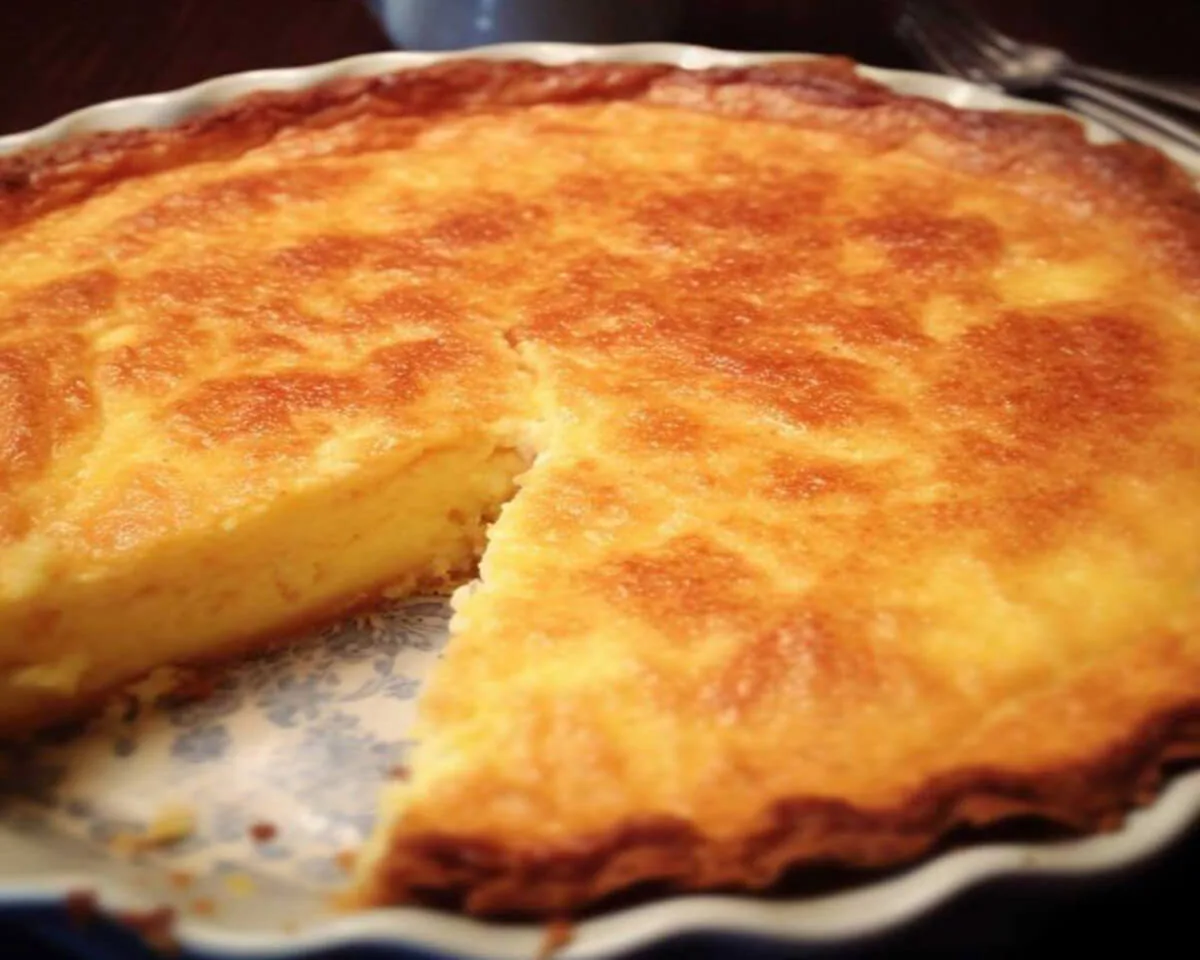
Once you pour the liquid gold into the dish, it’s time for the oven. As you slide the dish onto the center rack, the alchemy begins. For the first 20 minutes, it might look like nothing is happening, but beneath the surface, the flour is already making its way to the bottom. Around the 30-minute mark, you’ll notice the edges beginning to firm up and the center starting to rise slightly. By 45 to 50 minutes, the top should embrace a light, golden brown hue, and the center should be set but still have a slight, tempting jiggle when you gently shake the pan.
The Hardest Part: The Graceful Cool
When the pie emerges from the oven, it will be puffed and aromatic, filling your kitchen with the scent of toasted vanilla and sweet cream. However, you must resist the urge to slice into it immediately. The “Magic” continues as the pie cools. As the temperature drops, the egg proteins fully stabilize, and the layers finish setting into their final, velvety states.
Allowing the pie to reach room temperature is non-negotiable. If you slice it while hot, the custard may be too soft, and the distinct layers won’t be as visible. This waiting period is a lesson in anticipation, but it is well worth it. For those who prefer a firmer, colder dessert, you can even refrigerate it after it reaches room temperature, which makes the flavors even more concentrated and the texture more dense and luxurious.
Serving and Savoring the Masterpiece
Slicing into a Magic Crust Custard Pie is a revelation. As the knife passes through the layers, you’ll see the thin, cake-like crust at the bottom, the thick, pale-yellow custard in the middle, and the delicate, browned top. It is a visual testament to the simplicity and brilliance of the recipe.
Each bite is a journey into the realms of flavor. The velvety custard melts away, leaving behind the comforting taste of vanilla and milk, while the “magical” crust provides just enough substance to satisfy. It is a dessert that doesn’t need heavy garnishes. A simple dusting of nutmeg before baking is a traditional touch, or perhaps a few fresh berries on the side to provide a tart contrast to the sweet custard.
| Layer | Component | Texture |
| The Top | Caramelized Sugars/Fats | Light, Golden, Delicate |
| The Middle | Egg & Milk Emulsion | Velvety, Smooth, Trembling |
| The Bottom | Settled Flour | Soft, Cake-like, Structured |
Frequently Asked Questions
Can I use a different type of milk?
While 2% milk is the standard, you can use whole milk for an even richer, more decadent custard. I would avoid skim milk, as the lack of fat can make the custard feel a bit thin and less satisfying. Non-dairy milks like almond or oat can work, but the “magic” separation may vary slightly due to the different protein and fat structures.
Why did my pie not form a distinct crust?
This usually happens if the flour wasn’t measured correctly or if the mixture wasn’t blended thoroughly. It’s also important to ensure your oven is truly at 350°F; if the oven is too cool, the separation process won’t have the “engine” it needs to push the flour to the bottom before the eggs set.
Can I add other flavors?
Absolutely! While vanilla is classic, you can add a teaspoon of lemon or orange zest to the blender for a citrusy twist. Some bakers like to add a half-cup of shredded coconut to the mixture; the coconut will rise to the top with the sugars, creating a toasted coconut crust that is absolutely divine.
How should I store the leftovers?
If you have any slices left (which is rare!), store them in the refrigerator, covered with plastic wrap. The pie stays delicious for 3 to 4 days. In fact, many people find that the “magic” crust becomes even more distinct after a night in the fridge.
Conclusion: A Testament to Simple Brilliance
The Magic Crust Custard Pie is more than just a recipe; it’s a reminder that some of the greatest joys in life are the simplest. It takes the stress out of baking and replaces it with a sense of wonder. By allowing the ingredients to find their own place, you create a dessert that is balanced, beautiful, and undeniably delicious.
Whether you are a seasoned pro or a complete beginner, this pie invites you to experience the enchantment of the kitchen. It is a celebration of flavor and artistry that leaves a lasting impression on every palate it graces. So, gather your ingredients, fire up the blender, and prepare to be amazed by the mystical fusion of the Magic Crust Custard Pie. Experience the enchantment with every slice—it is a culinary masterpiece that truly lives up to its name. Enjoy!
Full recipe:
Ingredients:
- 1/2 cup all-purpose flour
- 1/4 cup margarine
- 2 cups 2% milk
- 4 eggs
- 3/4 cup sugar
- 2 teaspoons vanilla extract
- A pinch of salt
Instructions:
- Preheat your oven to 350°F (175°C).
- In a blender, combine margarine, eggs, sugar, salt, milk, vanilla extract, and all-purpose flour. Blend until the mixture is smooth.
- Pour the blended mixture into a greased 9-inch pie dish.
- Bake in the preheated oven for approximately 45-50 minutes or until the custard is set, and the top is lightly browned.
- Remove from the oven and allow it to cool to room temperature before serving.
- Slice and savor the delightful taste of your Magic Crust Custard Pie!
Experience the enchanting combination of velvety custard filling and a magical crust formation with this delicious pie. Enjoy every slice!